
https://j.people.com.cn/n3/2026/1123/c95952-20522183.html
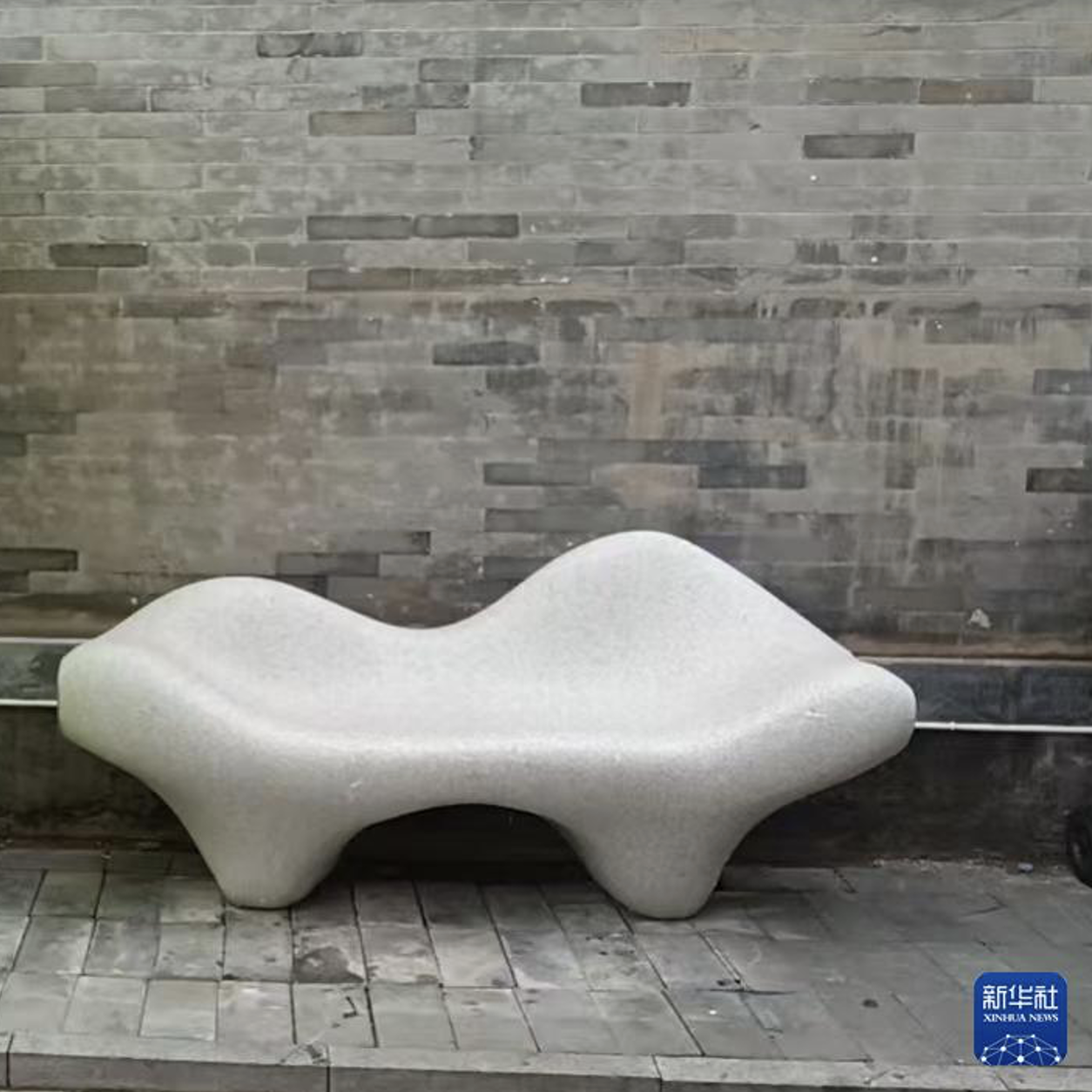
When taking a break along Qianmen Street—a historic thoroughfare in Beijing—many people find themselves sitting on “Cloud Benches,” which are shaped like pale gray clouds. Few realize, however, that these benches are crafted from recycled polypropylene (PP) materials—sourced from items like disposable food containers and plastic beverage cups—with each bench containing the equivalent of approximately 1,000 recovered plastic food containers.
According to the Beijing Municipal Commission of Urban Management, 48 eco-friendly, recycled benches have been installed across 26 public spaces in the city this year. These are distributed throughout seven districts—Dongcheng, Xicheng, Chaoyang, Haidian, Fengtai, Shijingshan, and Tongzhou—and can be found in historic districts, urban parks, waterfront greenways, and plazas within commercial areas.
There are currently two main types of recycled benches installed in Beijing. The “Cloud Benches” are made from recovered PP materials—such as takeout containers and plastic beverage cups—that have undergone cleaning, shredding, modification, and injection molding; each bench incorporates material from about 1,000 recovered food containers. Meanwhile, the “board-style” benches are created from Tetra Pak-style cartons (such as milk cartons) deposited by residents into collection machines. These cartons are sorted, separated from their aluminum and plastic components, shredded, and then heat-pressed into recycled composite boards. The resulting seats offer excellent breathability, making them well-suited for placement in the shade of trees or along walking paths. Next to each bench, an information plaque specifies the origin and quantity of the recycled materials used. Additionally, a QR code is provided that, when scanned, directs users to the nearest collection service point. This setup allows citizens to learn about the subsequent stages of the waste-sorting process while they sit and take a rest.