
https://j.people.com.cn/n3/2026/0805/c95952-20485462.html
During excavations at the Shanjiapu Cemetery—a burial site for people of the Qin State during the Warring States Period—located in Guyuan City, Ningxia Hui Autonomous Region, a team identified residue of alcohol brewed in the Qin State approximately 2,300 years ago and revealed the specific ingredients and brewing methods used.
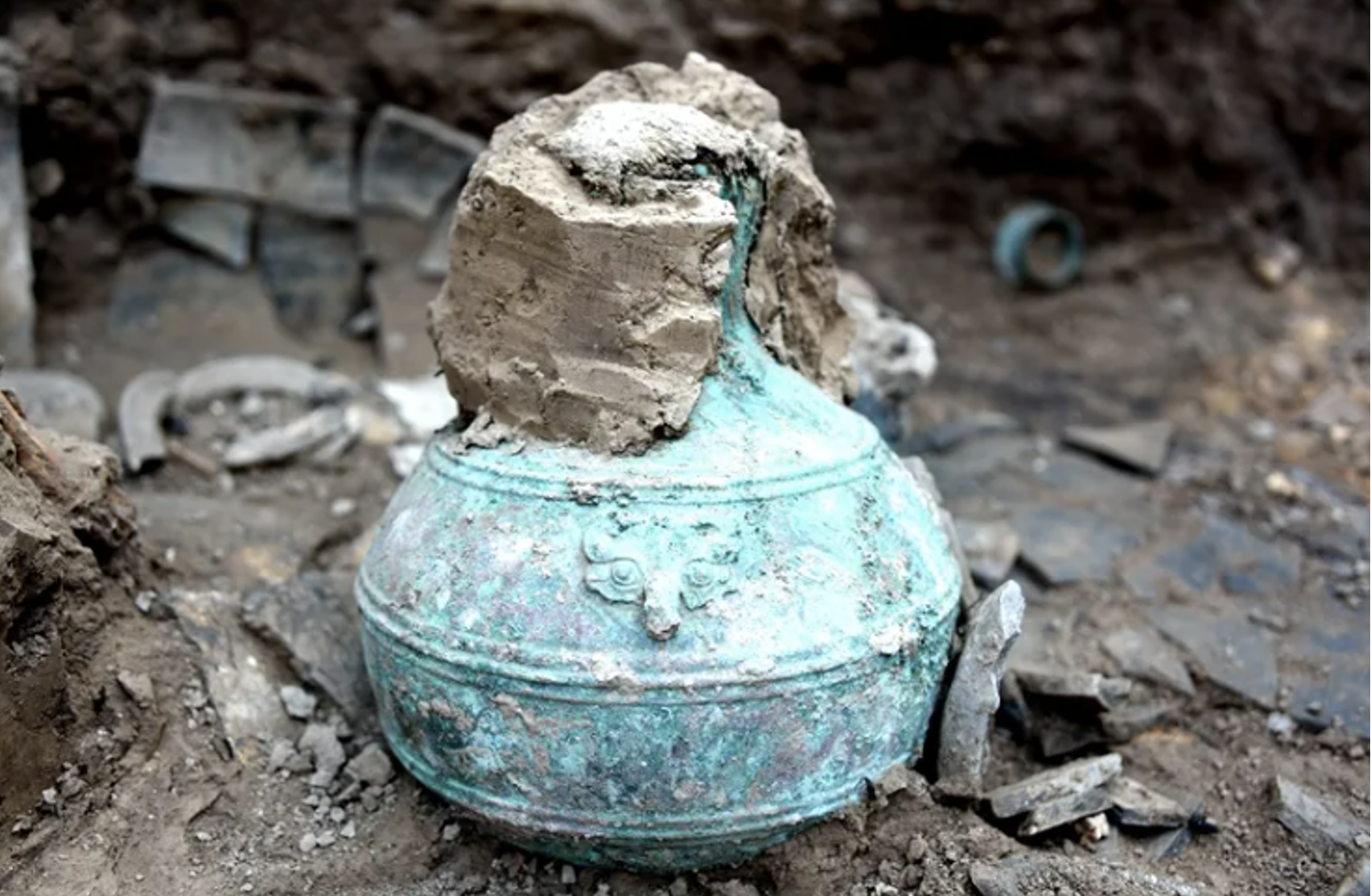
The Shanjiapu Cemetery is situated in the Yuanzhou District of Guyuan City, adjacent to the Qin Great Wall from the Warring States Period. To date, 183 tombs from this era have been excavated. Archaeologists collected 3,740 milliliters of ancient liquid residue from a single bronze *suantouhu* (garlic-head-shaped vessel), an artifact emblematic of Qin culture. The bronze vessel featured a double-sealing structure—lined with textile and coated externally with organic mud—which blocked external contamination. This allowed the alcohol to be preserved in a nearly pristine state for over two millennia, minimizing evaporation. Among the alcohol residues from the Qin State of the Warring States Period currently documented in China, this find boasts the best state of preservation and the most abundant information.
To elucidate the composition and brewing techniques of this ancient alcohol, the Ningxia Institute of Cultural Relics and Archaeology commissioned a research team led by Professor Wen Rui from the School of Cultural Heritage at Northwest University. The team conducted a comprehensive analysis using multiple advanced techniques, such as ultra-high-performance liquid chromatography-mass spectrometry (UHPLC-MS), combined with micro-analysis of starch granules, phytoliths, and yeast microfossils. The results revealed the presence of 24 types of compounds in the excavated liquid, including organic acids and their derivatives, amino acids and their derivatives, and carbohydrates. Furthermore, the distribution pattern of organic acids matched that of artificially aged *huangjiu* (Chinese yellow wine), confirming that the liquid was indeed a grain-based alcohol.
These multifaceted analytical results demonstrate that the people of the Qin state had already mastered the technique of producing *qu* (fermentation starter) from grain and using it to simultaneously drive saccharification and fermentation; this substantiates the advancement of Qin brewing technology during the Warring States period. This discovery fills an archaeological gap regarding alcohol production by the Qin state in the Ningxia region during the Warring States period. It not only corroborates China’s long history of grain-based alcohol brewing but also provides new physical evidence for studying agricultural development, ancient dietary culture, and the evolution of handicraft technologies in the pre-Qin era.