https://j.people.com.cn/n3/2026/0731/c95952-20484115.html
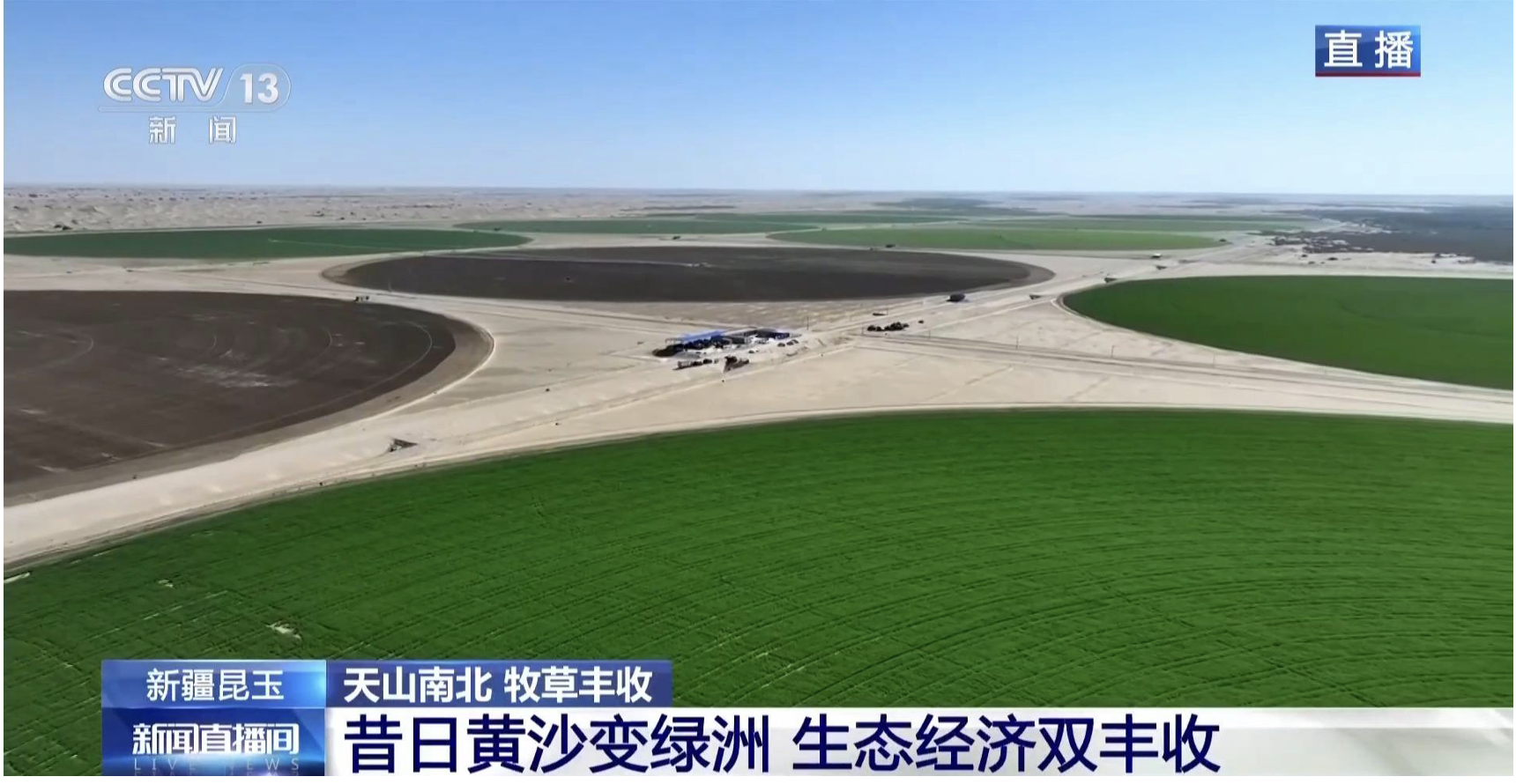
Alfalfa crop cultivation on the southern edge of the Taklamakan Desert, spread across a sea of sand, has reached maturity. Numerous green “giant discs” dot the landscape, with each cultivation area spanning approximately 46.7 hectares. The striking contrast between the green discs and the surrounding yellow desert creates a unique desert vista.
The key of this arrangement is a center-pivot sprinkler irrigation system. A water source serves as the central pivot, while a line of automated sprinklers rotates around it like a radius, spraying water as it moves. Compared to traditional surface irrigation, this system saves 30–50% of water, allowing the alfalfa to thrive vigorously even in the desert environment.
At the site, two large mowers are harvesting the alfalfa along the contours of the “giant discs.” The machines are equipped with sharp blades at the base that can rotate 360 degrees, and the cutting height is adjustable. After harvesting, the stubble is left at a height of approximately 5 centimeters, ensuring the roots remain undamaged so the crop can regrow. This “giant disk” allows for four to five harvests per year.
Tall fescue is cultivated in the plot adjacent to the alfalfa field; it is also scheduled to be ready for harvest in two to three months. Spanning a total area of approximately 933 hectares, this desert cultivation hub produces three types of forage crops, with an annual output exceeding 10,000 tons. By combining water-saving irrigation, mechanized operations, and diversified planting, the site is paving the way for sustainable development that balances ecosystem conservation with economic growth.