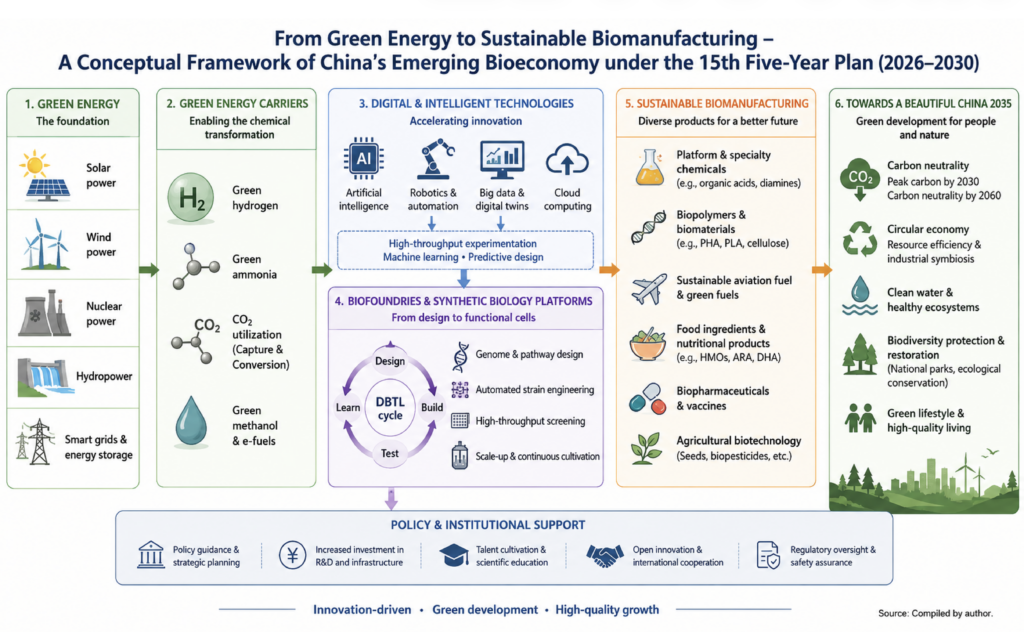
An offshore platform for coastal ecosystem research near Qingdao

https://en.people.cn/n3/2026/0711/c90000-20476703.html

China put into operation a large offshore platform for controlled in-situ experiments regarding coastal ecosystems. Developed by the CAS Institute of Oceanology (IOCAS), the facility is deployed in the Yellow Sea off Rongcheng in Shandong Province.

With a total area of 2,000 square meters and an experimental sea zone of 30,000 square meters, the platform is designed to support a wide range of ecological studies under real marine conditions. Under real seawater conditions, key factors such as temperature, nutrients and dissolved oxygen can be precisely regulated, enabling continuous, full-cycle observation and breaking the technical barrier between natural-sea observation and indoor controlled experiments.

The platform comprises modules for automated monitoring, water regulation, mesocosm ecosystems and logistics support. It enables precise single-factor or multi-factor regulation of temperature, nutrients, dissolved oxygen and other variables, allowing researchers to reproduce scenarios like ocean warming, acidification and eutrophication in a real marine environment. This capability is crucial for understanding how coastal ecosystems respond to both gradual climate trends and extreme events.

China’s coastal waters, where most marine economic activities and ports are concentrated, are hotspots for ecological disasters and risks. These waters, notably, are under mounting stress from climate change, land-based inputs and human activities. The new lab is located in a typical mariculture area of northern China, offering conditions for both natural and farmed ecosystem studies. Researchers can conduct scenario experiments on carrying capacity, ecological resilience, marine heatwaves and hypoxia to identify risk thresholds and optimize aquaculture management. Beyond serving the aquaculture industry, it can provide technical support for disaster prevention, precision restoration and coastal health management, said Sun.

The platform is designed for open international collaboration and will be made available to global research institutions, facilitating joint efforts to tackle pressing marine environmental challenges.

Photo: An aerial drone photo taken on July 10, 2026 shows the large offshore platform for controlled in-situ experiments on coastal ecosystems after being deployed in the Yellow Sea off Rongcheng in east China’s Shandong Province. China on Friday put into operation a large offshore platform for controlled in-situ experiments regarding coastal ecosystems, marking a new phase of systematic, intelligent and open coastal ecological research in the country. Developed by the Institute of Oceanology under the Chinese Academy of Sciences (IOCAS), the facility is deployed in the Yellow Sea off Rongcheng in east China’s Shandong Province. It is the country’s largest open-access facility for in-situ coastal experiments, the IOCAS said. (IOCAS/Handout via Xinhua)
more insights

https://www.sciencedirect.com/journal/green-carbon

Green Carbon has received its first Impact Factor of 14.2 in the 2025 Journal Citation Reports (JCR) released by Clarivate on June 17, 2026. This places Green Carbon in Q1 in both the “Engineering, Chemical” category (Ranked 10/183) and the “Green & Sustainable Science & Technology” category (Ranked 8/114). Achieving this in less than three years since its launch is a testament to the journal’s academic quality, rigorous publishing standards, and growing international influence.

https://english.news.cn/20260606/de8eff009a94407c8eeeb1fdab13d675/c.html

https://www.cell.com/cell/abstract/S0092-8674(26)00571-4?_returnURL=https%3A%2F%2Flinkinghub.elsevier.com%2Fretrieve%2Fpii%2FS0092867426005714%3Fshowall%3Dtrue

A joint research led by the CAS Institute of Oceanology in collaboration with the Hong Kong-based Chinese University of Hong Kong and Northwestern Polytechnical University in Xi’an deciphered the mechanism of ultra-long starvation tolerance in deep-sea isopods and provides an important paradigm for understanding how life balances growth and survival in extreme environments.

The deep sea is cold, dark, and almost entirely devoid of reliable nutrition, making long-term survival a remarkable evolutionary feat. To survive the abyss, the isopod possesses an enormous stomach that occupies about two-thirds of its body and acts like a deep-freeze pantry, allowing it to gorge when food is available and store the haul for months or even years. Second, it maintains an exceptionally low basal metabolic rate, essentially putting itself on permanent energy-saving mode. Together, these traits turn opportunistic binge eating into an ultra-long energy reserve.

In addition, a key gene involved in this metabolic slowdown, named ND1, is not originally part of the isopod’s own genome. The isopod “hijacks” it from an external symbiotic bacterium through horizontal gene transfer.

To verify ND1’s function, the researchers inserted the gene into zebrafish, nematodes, and human cells in the lab. Under normal temperatures, the gene recipients burned energy faster and became less tolerant of starvation. However, under cold conditions that mimic the isopod’s deep-sea home, ND1 suppressed energy metabolism, reduced mitochondrial activity, and boosted starvation endurance in zebrafish by a remarkable 37 percent.

This temperature-dependent switch solves the so-called “energy paradox” — how can a giant animal with high energy demands survive where food is extremely scarce? The ND1 acts as a metabolic thermostat, fine-tuning energy burn in response to environmental conditions. It provides a solution to the trade-off between body size and food scarcity.

http://english.cas.cn/newsroom/research-news/202606/t20260608_1161380.shtml

https://onlinelibrary.wiley.com/doi/10.1002/mlf2.70089

Researchers from the CAS Qingdao Institute of Bioenergy and Bioprocess Technology (QIBEBT) and Shenzhen Third People’s Hospital have developed a Ramanome-based phenotypic platform to improve the efficiency of bacteriophage evaluation for potential clinical use.

By combining Raman spectroscopy with a random forest model, the researchers introduced the Ramanome-based Phage Susceptibility Test (RPST). This phenotypic method reduces the turnaround time for host range verification to approximately one hour, compared to the 11–21 hours typically required by traditional plaque-based assays.

Bacteriophages offer a precise alternative to antibiotics in the fight against antimicrobial resistance. However, matching phages to clinical bacterial isolates remains challenging due to their narrow host ranges and the slow, qualitative nature of conventional assays.

The RPST framework monitors bacterial metabolic changes within 40 minutes of phage-host co-incubation and identifies four conserved Raman spectral biomarker regions linked to nucleic acids, proteins, and lipids. Combining these biomarkers into a Composite Infection Index (CII), the system achieved a 96.0% concordance rate across 25 phage-host pairs.

Unlike static assays, the continuous CII metric estimates the fraction of infected cells, enabling researchers to rank phage potency and determine the minimum MOI required to sustain infection.

While the method shows operational promise, the researchers acknowledge the need for large-scale, multi-center validation across different instruments to ensure long-term clinical reproducibility.

Back to …