http://english.cas.cn/newsroom/research-news/202606/t20260618_1174327.shtml
https://www.sciencedirect.com/science/article/pii/S092666902601085X?via%3Dihub
Researchers from the CAS Xishuangbanna Tropical Botanical Garden (XTBG) have identified two new polysaccharides in Spatholobus uniauritus, a medicinal vine traditionally used in southwestern China. These compounds demonstrated promising hypoglycemic and immunomodulatory effects, providing a scientific basis for developing them into functional ingredients for diabetes management and immune support.
S. uniauritus is a climbing vine belonging to the Fabaceae family. It is traditionally used in Xishuangbanna as a local substitute for Spatholobi caulis (known as Ji Xue Teng in Chinese medicine) to nourish blood, enhance circulation, and alleviate pain. Although the plant is known to contain abundant steroids, phenolic acids, and terpenoids, its polysaccharide constituents and their biological activities had remained unexplored.
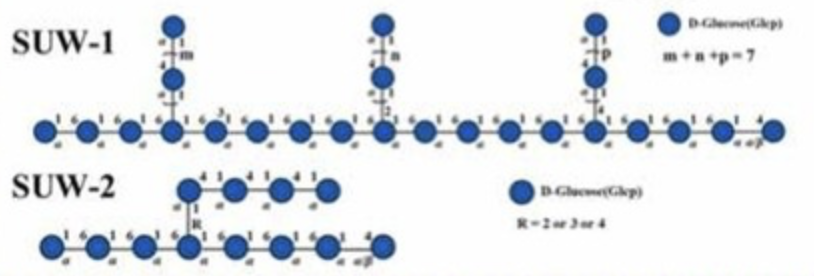
Using single-factor experiments and response surface methodology, the researchers optimized hot-water extraction conditions and isolated two new homologous polysaccharides from the stem vines, which they designated SUW-1 and SUW-2. Structural analysis revealed that both are glucans, with molecular weights of 4.57 kilodaltons (kDa) and 1.96 kDa, respectively.
The researchers evaluated glucose uptake in three major insulin-responsive tissues: skeletal muscle, liver, and adipose tissue. SUW-2 exhibited potent, dose-dependent enhancement of glucose uptake in muscle cells across all tested concentrations, outperforming the positive control insulin. SUW-1, by contrast, showed significant effects only at the highest concentration, but notably increased mitochondrial content, suggesting a distinct mechanism involving mitochondrial biogenesis.
In liver cells, both polysaccharides significantly increased glucose uptake after 24 and 48 hours, approaching the efficacy of metformin and insulin. The effects of the polysaccharides on adipocytes were time-dependent. SUW-1 increased glucose uptake after 48 hours, while SUW-2 inhibited glucose uptake at high concentrations. Importantly, neither compound exhibited cytotoxicity at any tested concentration.
Molecular docking simulations suggested that SUW-1 and SUW-2 may mediate their dual activities through interactions with key receptors, including TLR4, INSR, and TLR2.