https://j.people.com.cn/n3/2026/0529/c95952-20461893.html
In October 2020, the Civil Aviation Administration of China approved the establishment of 13 pilot zones for civil unmanned aerial vehicles—the first of their kind in the nation. In the span of just a few years, the low-altitude economy has transitioned from the experimental phase to practical application; it has spread to rural areas and is now being widely utilized across multiple sectors, including pesticide spraying, emergency rescue support, and logistics transport.
Agriculture and forestry constitute one of the sectors where the application of the low-altitude economy is relatively mature. According to data released in 2026 by China’s Ministry of Agriculture and Rural Affairs, the number of agricultural drones in China has exceeded 300,000 units, and the annual operational coverage area has surpassed 30.67 million hectares.
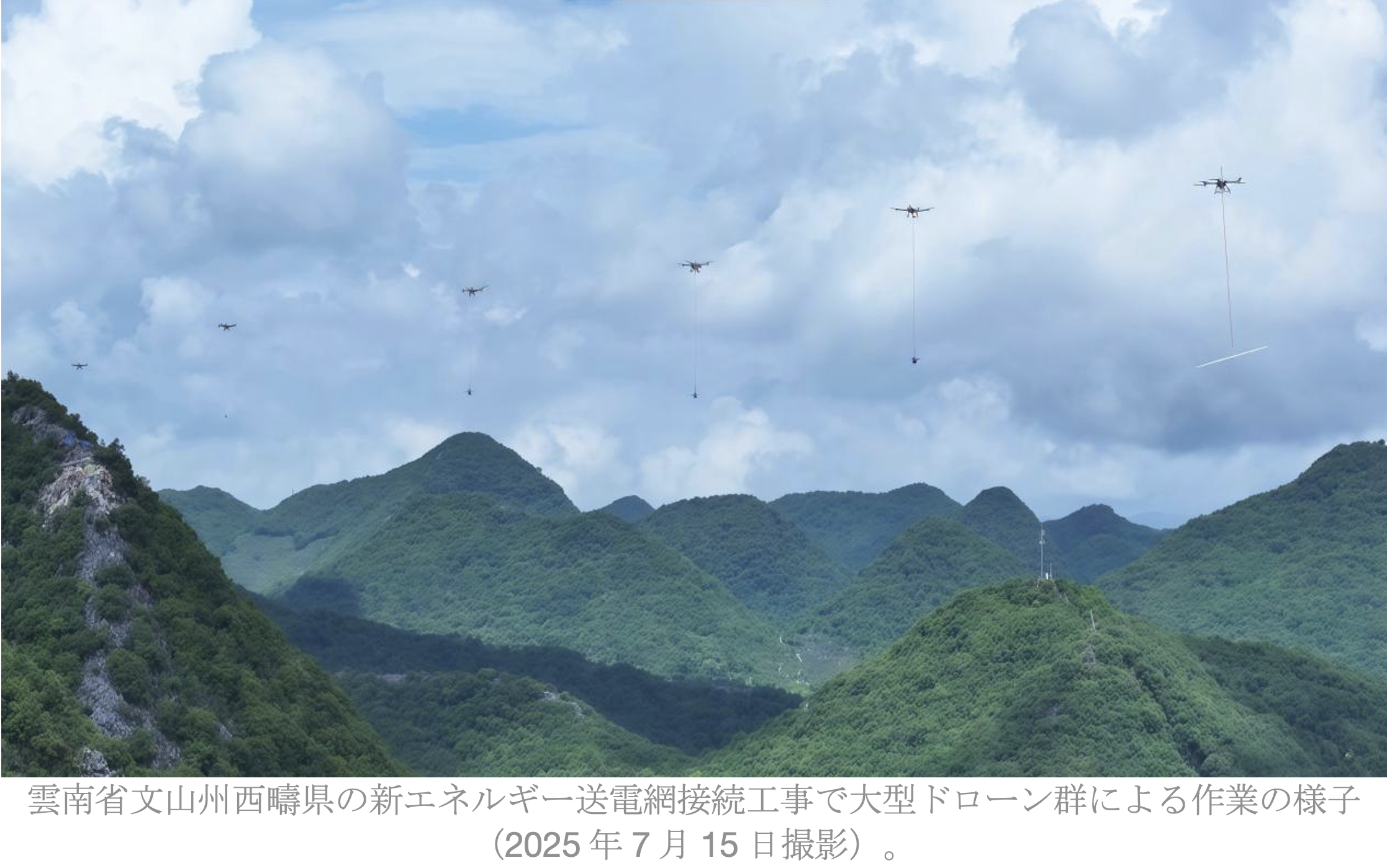
In mountainous regions with poor transportation access, the unique value of low-altitude transport becomes particularly pronounced. Previously, transporting saplings up the mountain relied entirely on human labor; a round trip took four hours, and a single person could carry only about 30 to 40 kilograms per day. It was extremely arduous work. Drones can transport 30 kilograms in a single load and complete a round trip in just 10 minutes. 60 to 70 flights per day are done. Tasks that were previously projected to take two months can now be completed in just seven days thanks to the drones.
Helicopters and drones are also gradually becoming a routine presence in the field of emergency rescue within rural areas. Compared to traditional ground-based travel, helicopter rescue can reduce response times by over 60 percent and provides access to complex terrain that is otherwise unreachable from the ground. Currently, in the mountainous regions of southern Anhui Province, aerial emergency routes have already been established to connect local hospitals with major metropolitan medical centers. The transport time per patient has been reduced from the traditional two to three hours to under 30 minutes, contributing significantly to securing the critical ‘golden hour’ for patients suffering from conditions such as myocardial infarction and stroke.
According to the “Report on the Development Index of China’s Low-Altitude Economy (2026),” the total output value of finished civilian drones in China reached 176.1 billion yuan in 2025—an increase of approximately 20% year-on-year (1 yuan is equivalent to approximately 23.5 JPY). According to estimates by Xiang Yu, an investment advisor at Western Securities, the market size for finished civilian drones in rural areas is projected to reach between 250 billion and 500 billion yuan by the end of 2030.