https://j.people.com.cn/n3/2026/0518/c95952-20457403.html
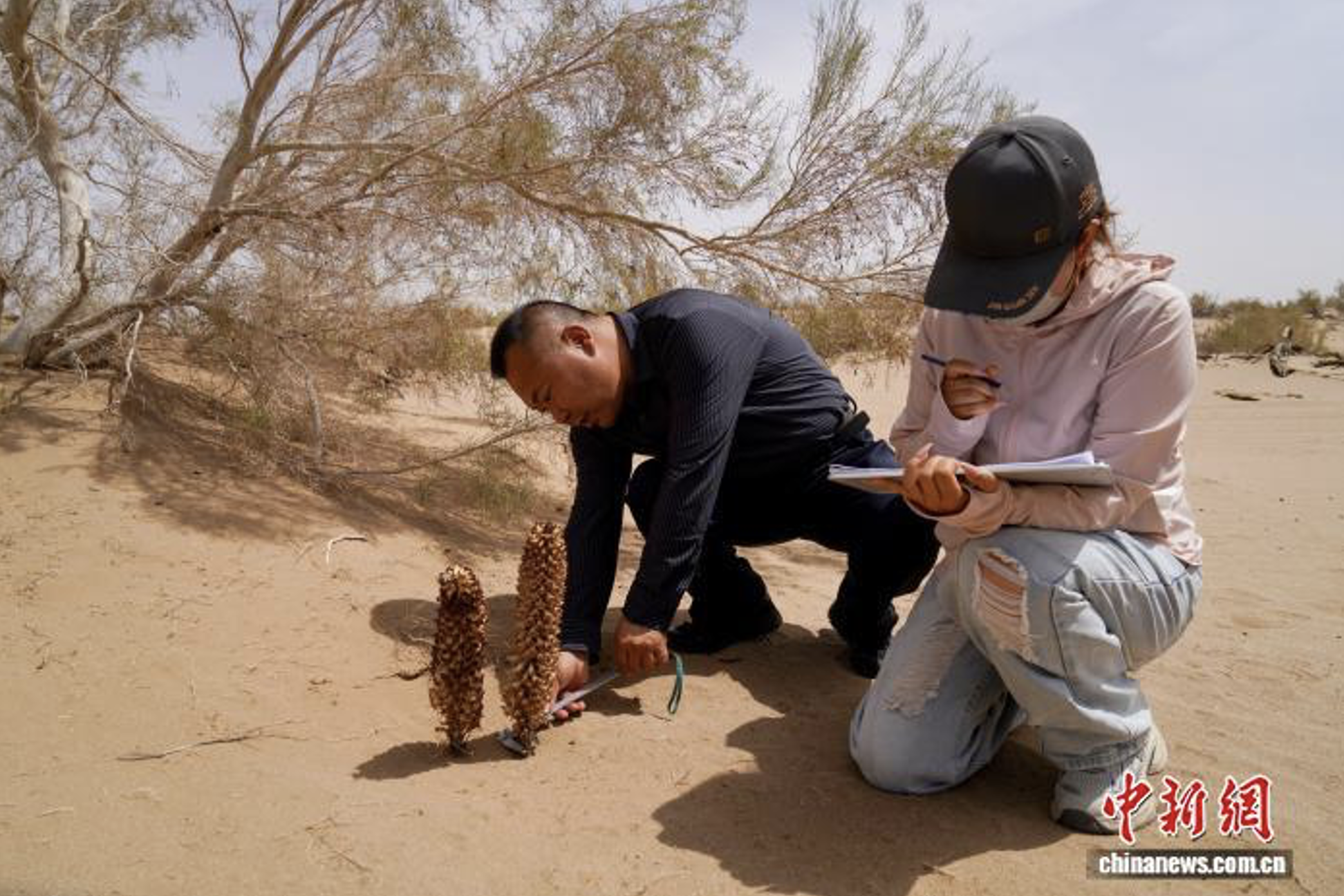
At a space breeding experiment base in Dongfeng Town, Inner Mongolia Autonomous Region, several Cistanche deserticola plants grown from “space seeds” have thrived in the sandy desert and produced large, rounded flower spikes, standing vigorously across the vast landscape. In contrast, conventionally grown control plants are still in the vegetative growth stage, creating a striking difference.
Recently, the cultivation of desert Cistanche “space seeds” carried aboard China’s first reusable recoverable technology test satellite, Shijian-19, achieved a major breakthrough in Dongfeng Town, with the first experimental plants successfully flowering. The vegetative growth period of these “space seeds” lasted only 338 days, nearly half the time required by traditional seeds. This marks an important milestone in genetic resource innovation for the local desert industry.
According to Xu Rong, a researcher at the CAMS Institute of Medicinal Plant Development and technical lead of the project, the growth period is a core indicator of a crop’s economic value. Space breeding uses the special environment of outer space to accelerate biological mutations. Achieving such a significant reduction in the growth cycle and successfully screening superior genetic resources in this experiment will support future variety selection, evaluation, and regional promotion.