https://j.people.com.cn/n3/2026/0518/c94476-20457378.html
Computing power is becoming an important foundational productive force. In essence, computing power means electricity. In order to pursue a green, intensive, and sustainable path for the development of computing capacity, China’s computing infrastructure companies have opened up new frontiers by building computing centers underwater.
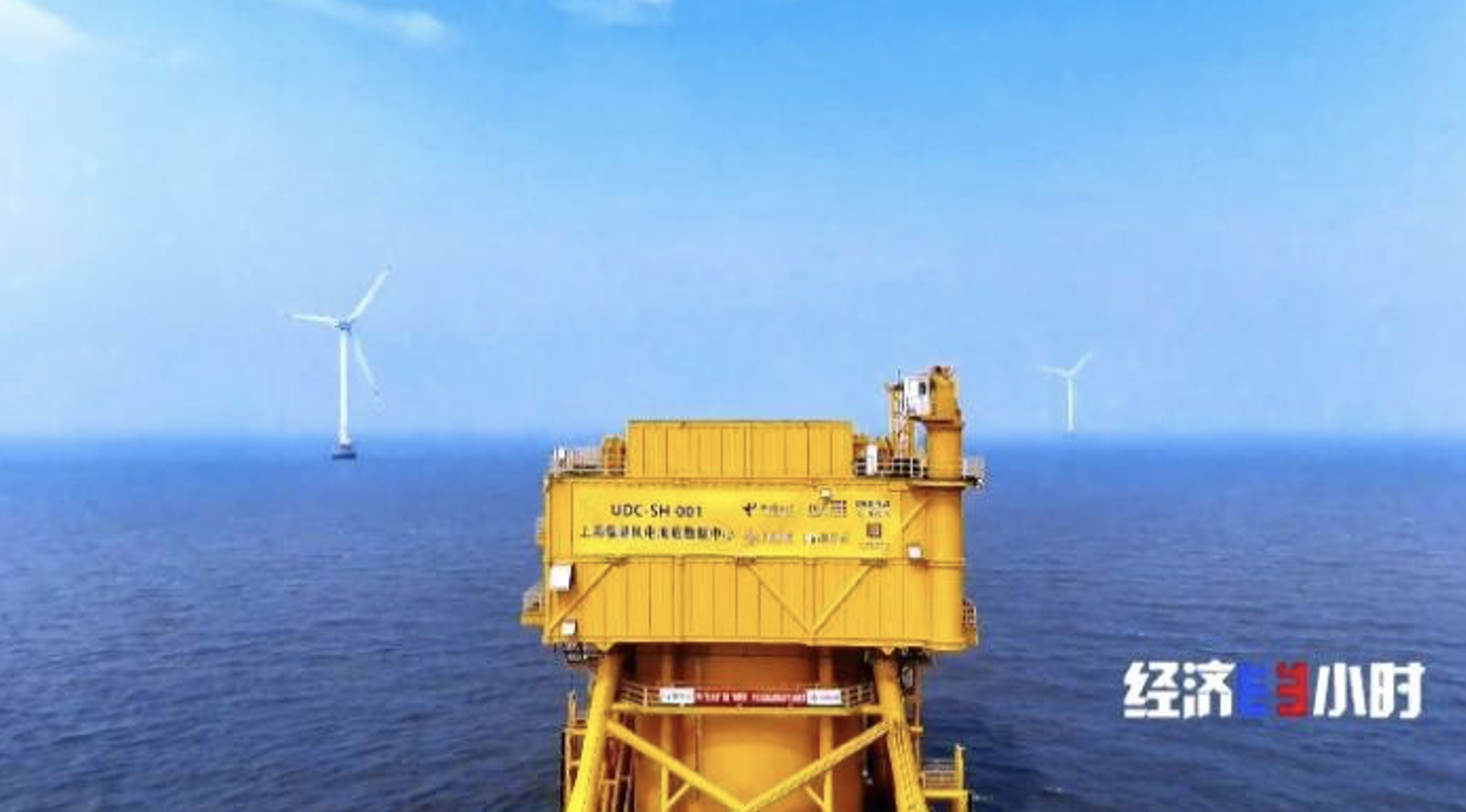
In the East China Sea, east of Xiaoyangshan in Shanghai’s Lingang area, stands a striking offshore platform rising more than 20 meters above sea level. This is the world’s first operational undersea data center directly connected to offshore wind power generation, built with a total investment of 1.6 billion yuan (1 yuan ≈ 23.3 yen). The overall project is planned to have a power capacity of 24 megawatts, while the first-phase demonstration project has an installed capacity of 2.3 megawatts (MW). The entire facility weighs 1,950 tons — roughly equivalent to the weight of 1,300 passenger cars.
The idea of constructing a data center in the ocean is an innovative attempt to solve the major problems associated with land-based data centers: high electricity consumption, large water usage, and extensive land requirements. In conventional data centers, around 40% of electricity consumption is used for cooling. However, the sea area where this undersea data center is located has an average annual seawater temperature below 15°C, effectively surrounding the facility with a natural cooling system.
A key indicator of a data center’s energy efficiency is PUE (Power Usage Effectiveness). The closer the value is to 1, the higher the energy efficiency. Typical land-based data centers generally have a PUE between 1.4 and 1.6, whereas this undersea data center can keep its PUE below 1.15.
About 500 meters from the undersea data center stand more than 50 wind turbines. This 200-megawatt-class offshore wind farm generates over 500 million kilowatt-hours of electricity annually. The uninterrupted supply of green electricity produced there serves as the energy source for the undersea data center.
Following the commercial success of the “offshore wind power + undersea computing power” model in Shanghai’s Lingang area, the design and operations team has decided to further expand undersea data centers. According to reports, the team plans to deploy large-scale undersea data centers with capacities of 5–7 megawatts per data module. Multiple centers are planned for sea areas in the Yangtze River Delta, Pearl River Delta, and Bohai Bay regions, and these centers will eventually be interconnected.
The current 2.3-megawatt undersea data center in Shanghai Lingang is described as merely “the first step” toward a nationwide rollout of undersea data centers across China.