https://j.people.com.cn/n3/2026/0410/c95952-20445419.html
https://news.qq.com/rain/a/20260410A03EP000
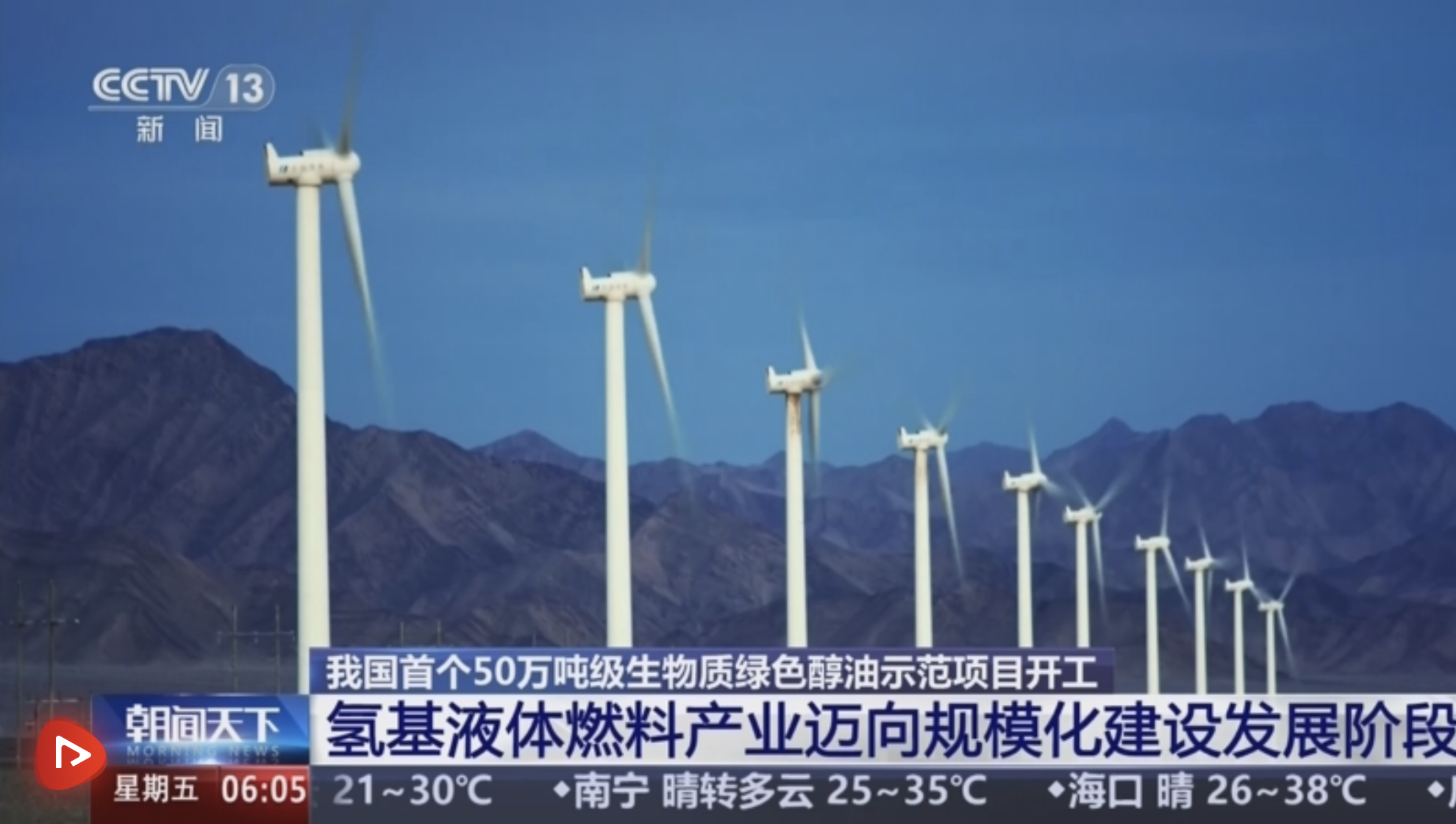
Invested and constructed by China Energy Engineering Corporation (CEEC) China Power Engineering Co., Ltd., this project marks a new stage in my China’s hydrogen-based liquid fuel industry, transitioning from demonstration to large-scale construction.
The project plans to build a 500,000-ton-per-year green fuel demonstration base, simultaneously equipped with 2 gigawatts of centralized wind power. It will consume approximately 3 million tons of biomass annually and ultimately produce various green fuel products such as green methanol, green aviation fuel, and green ammonia. The total investment is 32 billion yuan, and the project will be constructed in three phases: Phase I will achieve an annual production of 100,000 tons of green methanol; Phase II will achieve an annual production of 300,000 tons of green aviation fuel; and Phase III will achieve an annual production of 100,000 tons of green ammonia, fully achieving the overall green fuel production capacity target of 500,000 tons. The supporting wind power project will provide stable and clean green electricity support for the entire production process, ensuring a low-carbon closed loop across the entire production chain.
This year, “green fuel” was included in China’s government work report for the first time and was established as a new growth point for national development during the 15th Five-Year Plan period. Green hydrogen energy, green methanol, sustainable aviation fuel, and green ammonia industries are entering a period of rapid development. In the core biomass gasification stage, the project relies on the two-stage fluidized bed gasification technology with independent intellectual property rights owned by China Power Engineering Corporation, significantly improving the quality and conversion efficiency of syngas. Simultaneously, the park is constructing a green computing center, actively exploring a new model of synergistic development of “green electricity + computing power,” and focusing on creating a low-carbon closed-loop operation system encompassing “green electricity – green hydrogen – green chemicals – green computing power,” setting a benchmark for industrial development that deeply integrates and synergistically empowers green energy and the digital economy.
Liaoning Kangping, where the project is located, possesses unique resource advantages of “wind power + straw.” The project’s implementation realizes the efficient conversion of agricultural waste into industrial raw materials and wind power “curtailment” into green electricity, effectively promoting the transformation and upgrading of the local area from a traditional agricultural county to a strong county in the energy and chemical industry. The project has three values: energy security, carbon peaking and carbon neutrality practice, and rural industrial revitalization. It can not only enhance my country’s self-sufficiency in green fuel supply and help achieve the “dual carbon” goals, but also drive the resource utilization of local agricultural waste, broaden the path for rural industrial development, and boost employment and income.
Furthermore, this project holds significant demonstrative value for the construction of the green hydrogen corridor in Liaoning and even Northeast and East China. It will empower Shenyang to become the “Hydrogen Capital of Northern China” and “Energy Storage Capital,” striving to create a replicable and scalable industrial demonstration effect in the Liaoning-Shenyang region. Simultaneously, the project’s construction and operation will provide a practical path for the large-scale construction of my country’s new energy system, powerfully contributing to new breakthroughs in the comprehensive revitalization of Northeast China.