https://j.people.com.cn/n3/2026/0410/c95952-20445405.html
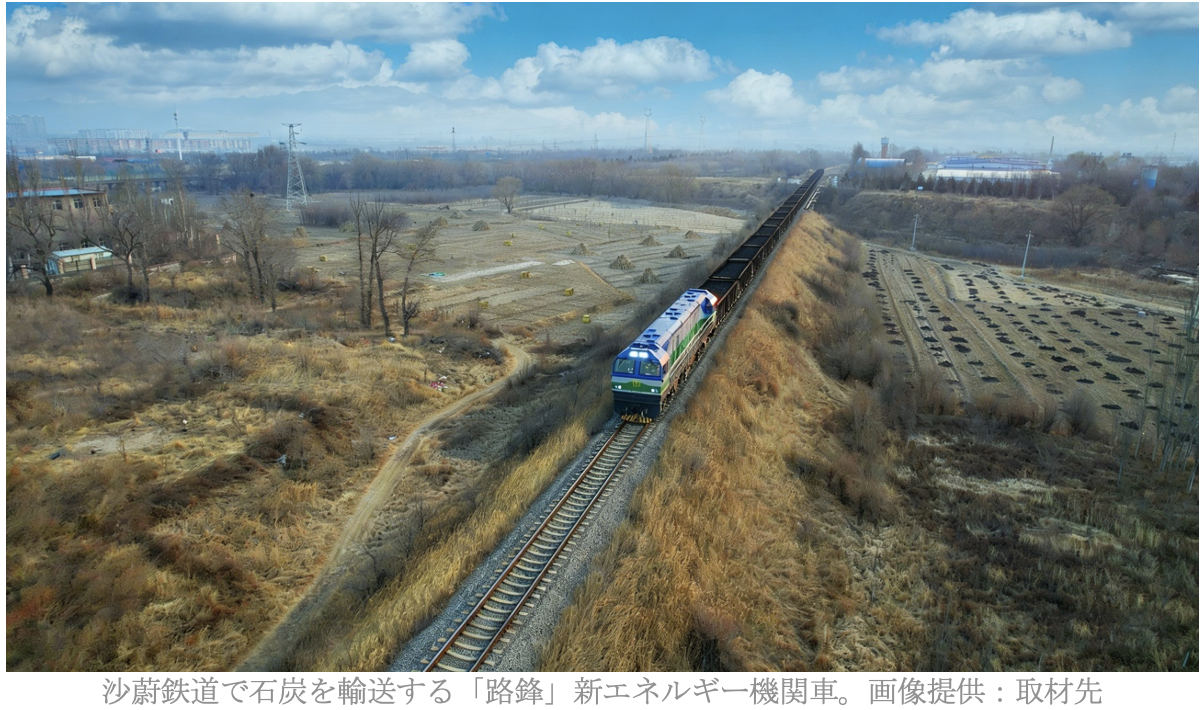
The “Lufeng” new energy locomotive, the largest battery capacity all-electric locomotive in China, has officially begun operation on the Shawei Railway in Zhangjiakou City, Hebei Province. This locomotive is the first all-electric locomotive in China to meet the demands of medium- and long-distance trunk line transport.
“Lufeng” is equipped with a 4200 kWh ultra-high-capacity lithium iron phosphate battery, and is responsible for long-distance coal transport on the 142-kilometer Shawei Railway.
In terms of energy supply and battery performance, “Lufeng” has achieved a double breakthrough. By adopting a modularized series design, the battery’s energy density has been improved by 18% compared to conventional products. Furthermore, it is equipped with an intelligent thermal management system that can monitor the battery’s health in real time, and the charge/discharge cycle life reaches more than 4000 cycles. Stable operation is possible even in extremely cold environments of -20°C. At the same time, it supports rapid charging in about 1.5 hours, efficiently meeting the continuous operation needs of rail freight transport and significantly improving operational efficiency.
To further unlock its energy-saving potential, “Lufeng” employs highly efficient energy regeneration and kinetic energy recovery technologies. During braking and downhill driving, the locomotive automatically recovers kinetic energy through an AC-to-DC conversion mode, achieving a recovery efficiency of 75%. This not only extends the cruising range but also dramatically improves energy utilization efficiency, perfectly aligning with the core concept of green freight transport.
Currently, the “Lufeng” locomotive is officially undertaking coal transport duties on the Shawei Railway’s dedicated freight line, becoming the mainstay of green transport on that line. Based on actual operational data, estimates suggest that under full load operation, it can save more than 6 million yuan in fuel costs per locomotive annually and reduce carbon dioxide emissions by more than 300 tons. Over its entire lifecycle, it is expected to reduce carbon emissions by approximately 9,000 tons, equivalent to planting 28,000 trees, thus supporting the construction of a “near-zero carbon freight transport corridor” through its advanced technology.