
In brief: China’s Ministry of Industry and Information Technology (MIIT) has approved a coordinated 6G innovation program involving eight provincial-level regions. In parallel, the Aerospace Information Research Institute (AIR) of the Chinese Academy of Sciences has demonstrated Q/V-band wireless communication at 27 Gbps using high-order modulation, dual-carrier transmission and polarization multiplexing. The experiment represents a step towards the integration of terrestrial and satellite communication networks.
Further reading – Technology and industrial development
1. Regional 6G innovation ecosystems
The MIIT program involves Beijing, Hebei, Shanghai, Jiangsu, Zhejiang, Anhui, Hubei and Guangdong. It aims to integrate regional research and industrial capabilities across the emerging 6G value chain.
Technology development will focus on:
- Next-generation communication terminals
- Critical electronic components
- Operating systems
- Satellite internet
Potential industrial applications include immersive communication, advanced manufacturing, embodied AI and robotics, low-altitude aviation and intelligent maritime systems.
Central and regional authorities will coordinate technology development, industrial implementation and application testing, with regular evaluations by MIIT.
Source: People’s Daily, November 18, 2026
2. Integration of terrestrial and satellite communication
An important objective of future 6G architectures is the integration of terrestrial networks with airborne and space-based communication infrastructure.
High-throughput satellites in low Earth orbit (LEO) are expected to become important components of such networks. Their implementation requires higher data transmission rates between satellites and terrestrial ground stations.
The Q/V frequency bands, broadly in the 40–75 GHz range, offer approximately 10 GHz of available bandwidth. However, high-order signal modulation at these frequencies is technically demanding because of radio-frequency nonlinearities, phase noise and atmospheric attenuation.
3. Experimental validation of Q/V-band communication
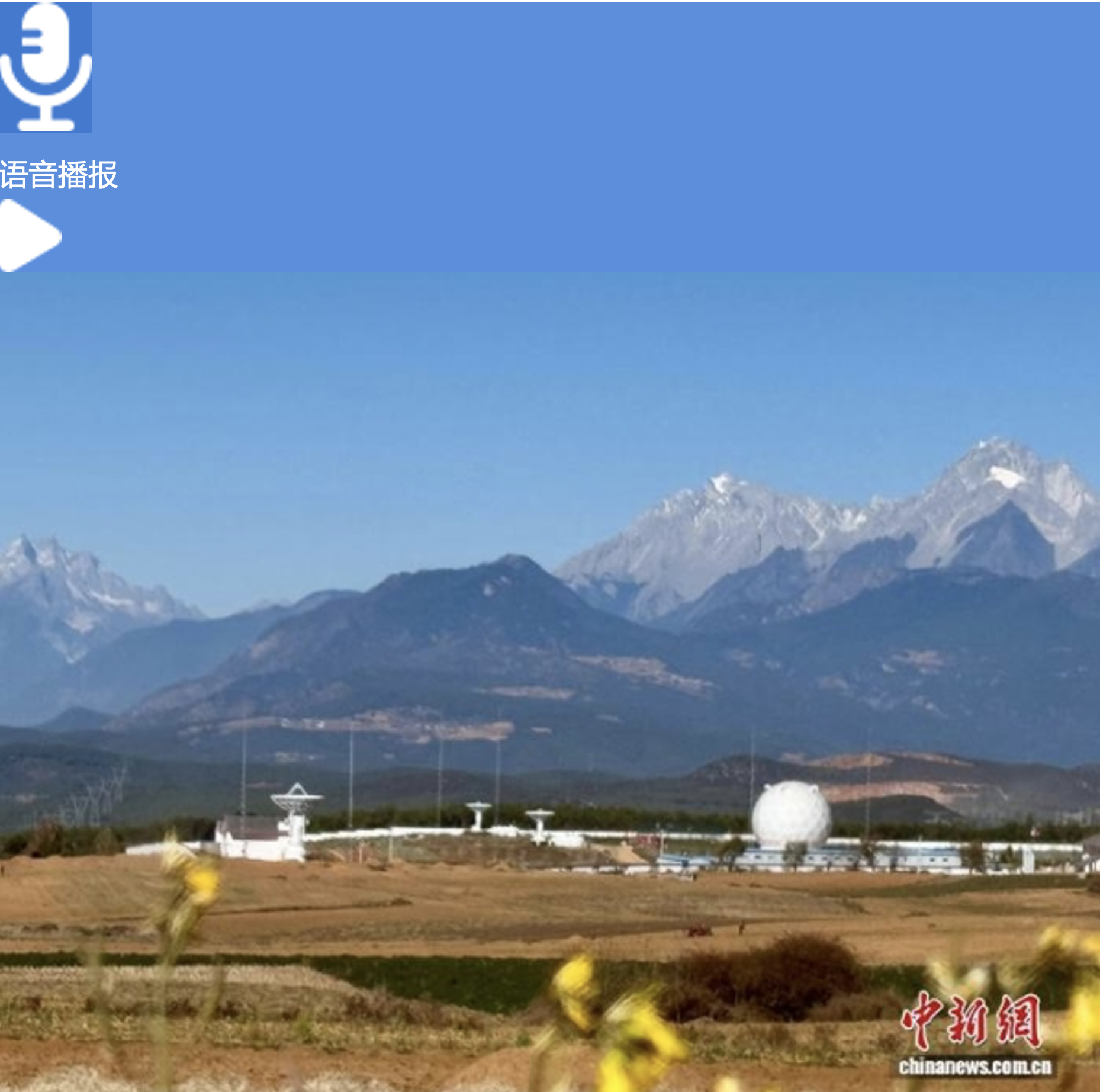
At the Lijiang station of the China Remote Sensing Satellite Ground Station in Yunnan Province, AIR has established a terrestrial experimental platform simulating satellite communication under orbital operating conditions.
The experimental program included three stages:
- Wired closed-loop testing
- Far-field wireless transmission
- End-to-end system performance evaluation
Entirely domestically developed equipment was used, including antennas, power amplifiers, channel components and baseband processing systems.
Four quadrature amplitude modulation (QAM) schemes were systematically investigated:
| Modulation | Bits per symbol |
|---|---|
| 64-QAM | 6 |
| 128-QAM | 7 |
| 256-QAM | 8 |
| 512-QAM | 9 |
Higher-order QAM increases spectral efficiency but also requires higher signal quality and more precise compensation of transmission distortions.
4. Transmission performance
The highest data transmission rates were obtained with 512-QAM, combined with frequency and polarization multiplexing.
| System configuration | Data rate (Gbps) |
|---|---|
| Previous Chinese single-channel performance | 3.0 |
| 512-QAM, single channel | 6.75 |
| Dual-carrier and polarization multiplexing | 27 |
| Future development target | >50 |
The single-channel transmission rate of 6.75 Gbps represents a 2.25-fold improvement over previous Chinese performance in the same frequency band.
By combining two carrier frequencies with two polarization channels, the researchers achieved a further fourfold increase:
6.75 Gbps × 2 carriers × 2 polarizations = 27 Gbps
The next development target is a transmission rate exceeding 50 Gbps.
5. Research and industrial collaboration
The project was coordinated by the Aerospace Information Research Institute (AIR) of the Chinese Academy of Sciences in collaboration with three domestic technology developers:
- Beijing Rongwei Technology
- The 13th Research Institute of China Electronics Technology Group Corporation (CETC)
- Nanjing Diange Communication Technology
Key technological developments include lightweight Q/V-band antennas, intelligent signal compensation and phase-noise compensation.
The project builds on existing Chinese expertise in high-order modulation and demodulation in the X and Ka frequency bands.
Source: Chinese Academy of Sciences, November 18, 2026
6. Technology assessment
The significance of the Lijiang experiment lies not only in the reported transmission rate but also in the integration of domestically developed hardware, signal processing and multiplexing technologies into an experimental communication system.
The combination of national research infrastructure, industrial component development and centrally coordinated regional innovation programs illustrates China’s approach to preparing the technological and industrial basis for future 6G networks.
However, the reported results were obtained on a ground-based experimental platform. Validation under actual satellite operating conditions remains a further development step.
Furthermore, the published reports do not specify the actual occupied bandwidth, bit error rates, transmission distance or the allocation of data rates between the two transmission directions. A quantitative international benchmark is therefore not yet possible.