https://j.people.com.cn/n3/2026/0610/c95952-20465936.html
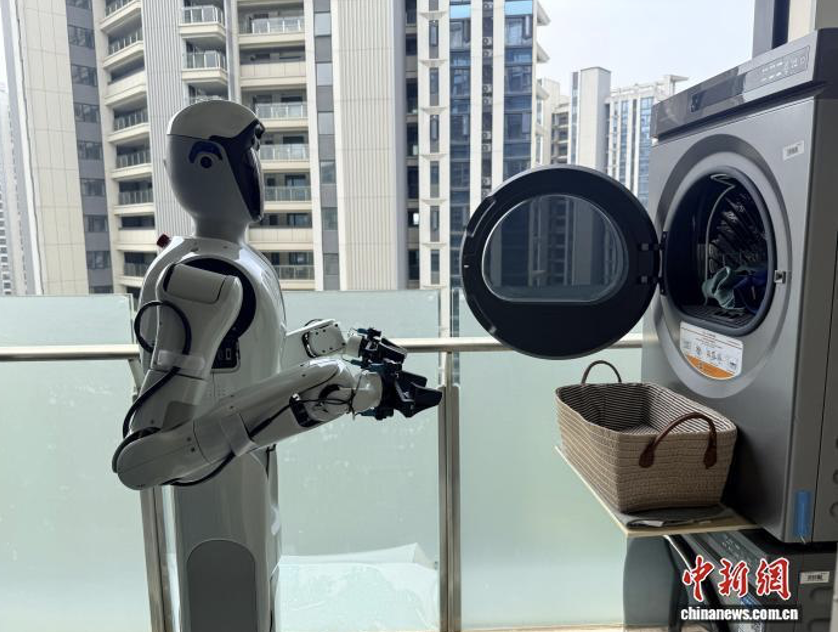
A first batch of 100 units of general-purpose home robot are currently tested in Wuhan households.
The robots stand 167 centimeters tall and features gripper-style hands and a wheeled base. They move smoothly and operate almost silently. Their footprint is less than one square meter, a two-hour charging time, and an eight-hour continuous runtime. Upon entering a home for the first time, they autonomously create a 3D map and identify the locations of furniture. If the layout changes, the information can be updated within minutes simply by giving a voice command to “re-learn the environment,” eliminating the need for a technician visit.
The robots can independently perform seven types of tasks, including
- heating food,
- washing dishes,
- folding laundry, and
- cleaning tables.
According to the project manager for the robot’s development, the robot is designed to be a household partner. As living standards rise, demand is growing for robots catering to children, the elderly, and pets. Moving forward, we plan to equip it with new capabilities—such as reading picture books aloud, providing companionship, and cleaning up after pets—so it can flexibly adapt to the complexities of a home environment. Currently, it is learning tasks like feeding goldfish, arranging flowers, and tidying up toys.
According to the Hubei Province Humanoid Robot Industry Alliance, the province has launched an implementation plan for a “breakthrough project” in the humanoid robot industry and established an industrial investment “mother fund” totaling 10 billion yuan. The goal is to achieve an 85% local sourcing rate for key components. Currently, more than 30 companies within the industry chain are clustered in Wuhan’s “Optics Valley” (Guanggu), and an increasing number of “Made-in-Wuhan” robots are rapidly transitioning from laboratory settings to real-world applications.