https://www.cas.cn/syky/202606/t20260604_5111717.shtml
https://www.nature.com/articles/s41586-026-10575-8
Maize is China’s largest grain crop, but protein content of Chinese maize is generally low, and the protein source for animal feed relies heavily on soybean meal.
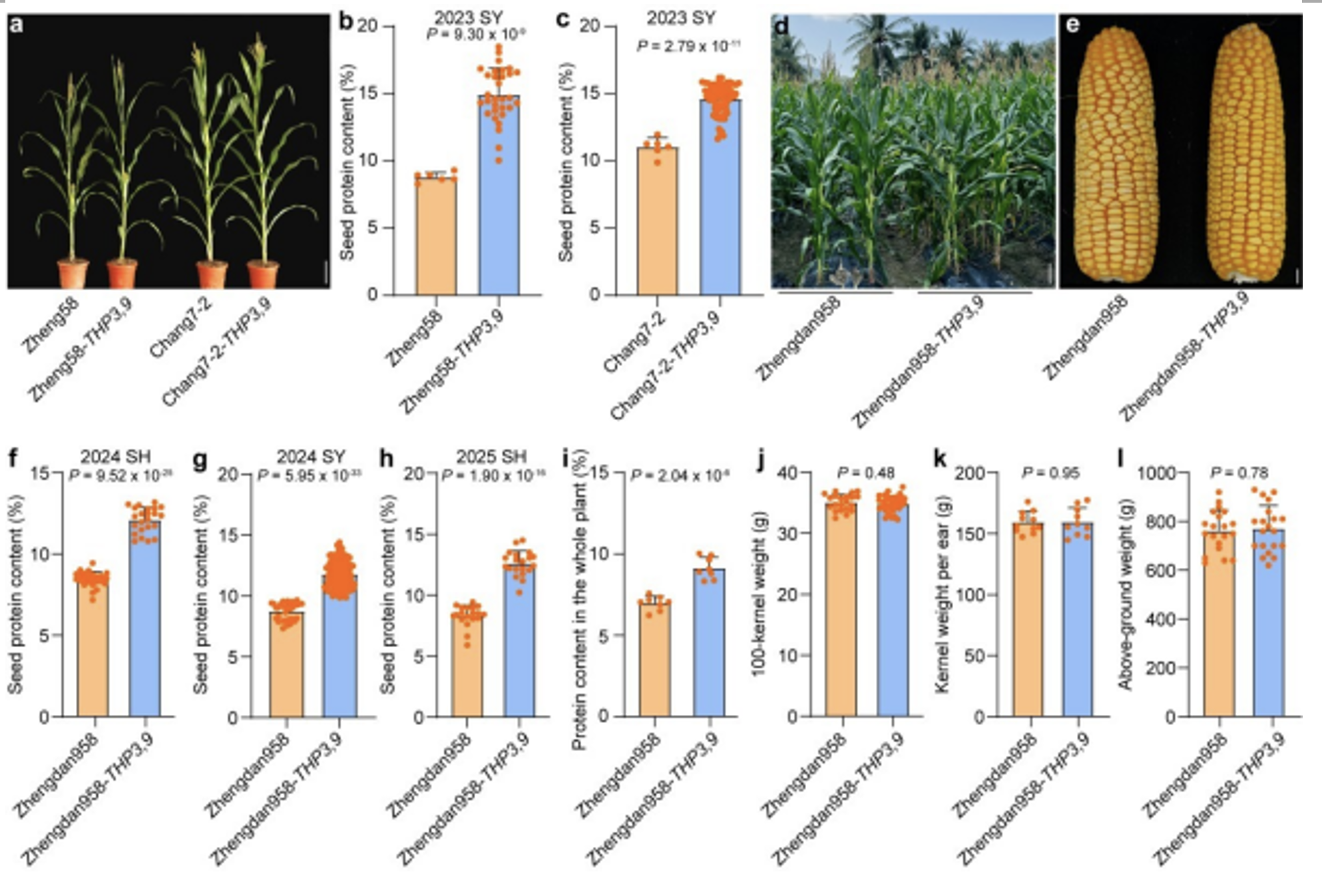
A team from the CAS Center of Excellence in Molecular Plant Sciences has succeeded in cloning a second major high-protein gene, *THP3-T*. By pyramiding this gene with *THP9-T*—the first high-protein gene previously identified by the team, the grain protein content of maize inbred lines was increased from 10% to 15%. For “Zhengdan 958,” the hybrid maize variety with the largest cultivation area in China, grain protein content rose from 8.5% to between 12% and 13%, and whole-plant protein content increased from 7% to over 9%, while maintaining stable yields.
China produces approximately 300 million tons of maize annually. If the protein content of maize used for feed nationwide could be raised by 4 percentage points to exceed 12%, the additional protein generated would be equivalent to that found in over 30 million tons of soybeans. Thus, breeding high-protein maize to replace soybean meal in animal feed is an effective strategy for alleviating the shortage of feed protein.
Research has shown that wild maize can have a protein content of up to 30%. However, the lack of targeted selection for protein content during the 9,000-plus years of domestication and modern breeding processes resulted in the “loss” of many superior genes in modern maize varieties.
To date, the team has improved the parental lines of over 80 major domestic maize varieties, raising their protein content to over 14%. Moving forward, the team plans to establish an integrated industry chain model—spanning gene discovery and germplasm creation to novel feed processing—thereby contributing to food security and the development of new quality productive forces in agriculture.