https://www.cas.cn/cm/202605/t20260513_5109506.shtml
The Tianzhou-10 cargo spacecraft will conduct 41 scientific experiments, one of which is the experiment on the new flexible solar cell wing.
Solar charging is the main energy source for the operation of satellites and space stations in space, and one of the important materials providing this energy source is the solar cell wing. Currently, satellites and space stations mainly use rigid solar cell wings with rigid substrates and glass covers, resulting in large weight, volume, and cost.
In recent years, monocrystalline silicon solar cells have become highly sought after, becoming a popular material choice for converting solar energy into electricity. However, they are very “fragile.” Mechanically, even a slight bending stress or vibration during transportation can cause them to break. This limits the application scenarios of monocrystalline silicon solar cells. A research team from the Shanghai Institute of Microsystem and Information Technology, Chinese Academy of Sciences, has successfully developed a flexible monocrystalline silicon solar cell, achieving a milestone breakthrough.
According to Liu Zhengxin, a researcher at the CAS Shanghai Institute of Microsystem and Information Technology, its thickness is only 80 micrometers, about the thickness of a human hair. It can be folded and rolled up. This solar cell is mainly made of flexible monocrystalline silicon. This flexible monocrystalline silicon solar cell technology was invented three years ago and is unique in the world. We have applied for many invention patents. Its main characteristics are thinness and lightness, less than one kilogram per square meter. It can be made into both rolled and flat panels. Not only is its efficiency high, but its resistance to space radiation is also better, which can reduce the cost of rocket launches.
Under normal circumstances, the more batteries a satellite and space station carry, the more abundant the energy supply and the stronger its operational capabilities. Therefore, the new flexible monocrystalline silicon solar cell allows for carrying more solar panels into space within the same area, creating ultra-large areas and greatly increasing power generation.
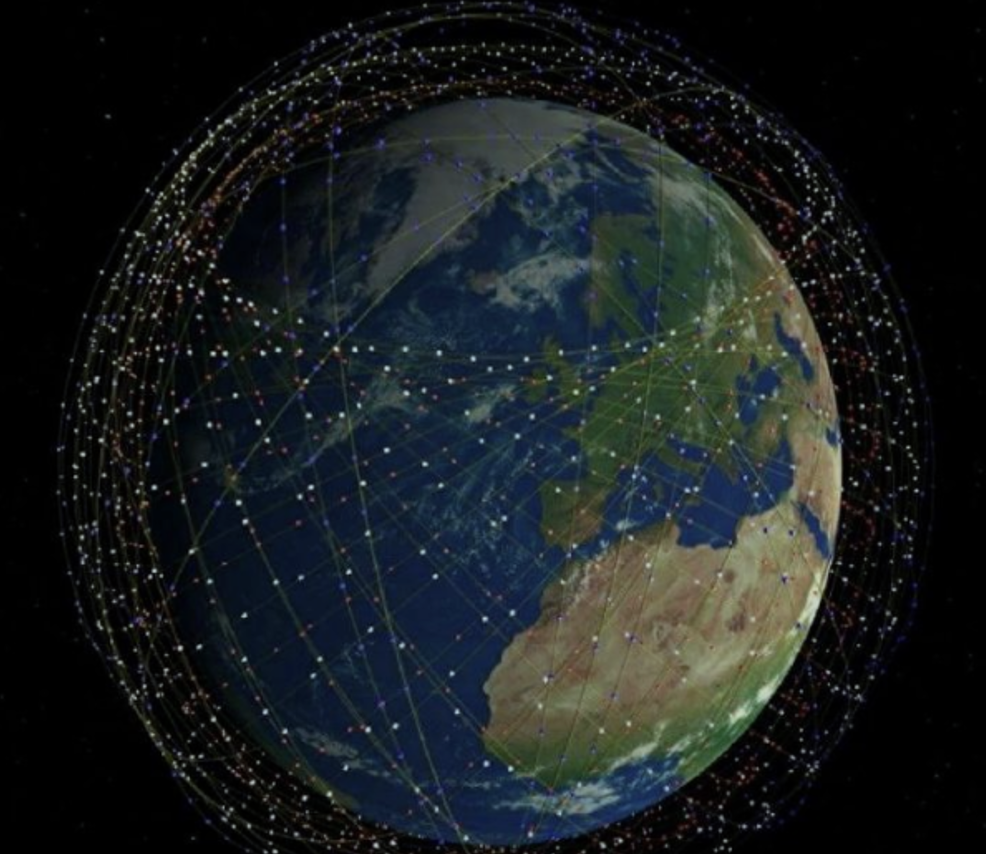
China plans to build a satellite internet represented by the “StarNet” and the G60 “Thousand Sails Constellation,” with more than 30,000 satellites in the network, resulting in a huge demand for solar cells. This lightweight and highly efficient flexible solar panel is precisely the “energy heart” for future large-scale space applications.