https://j.people.com.cn/n3/2026/0506/c95952-20453108.html
https://www.sciencedirect.com/science/article/abs/pii/S1673852726001475
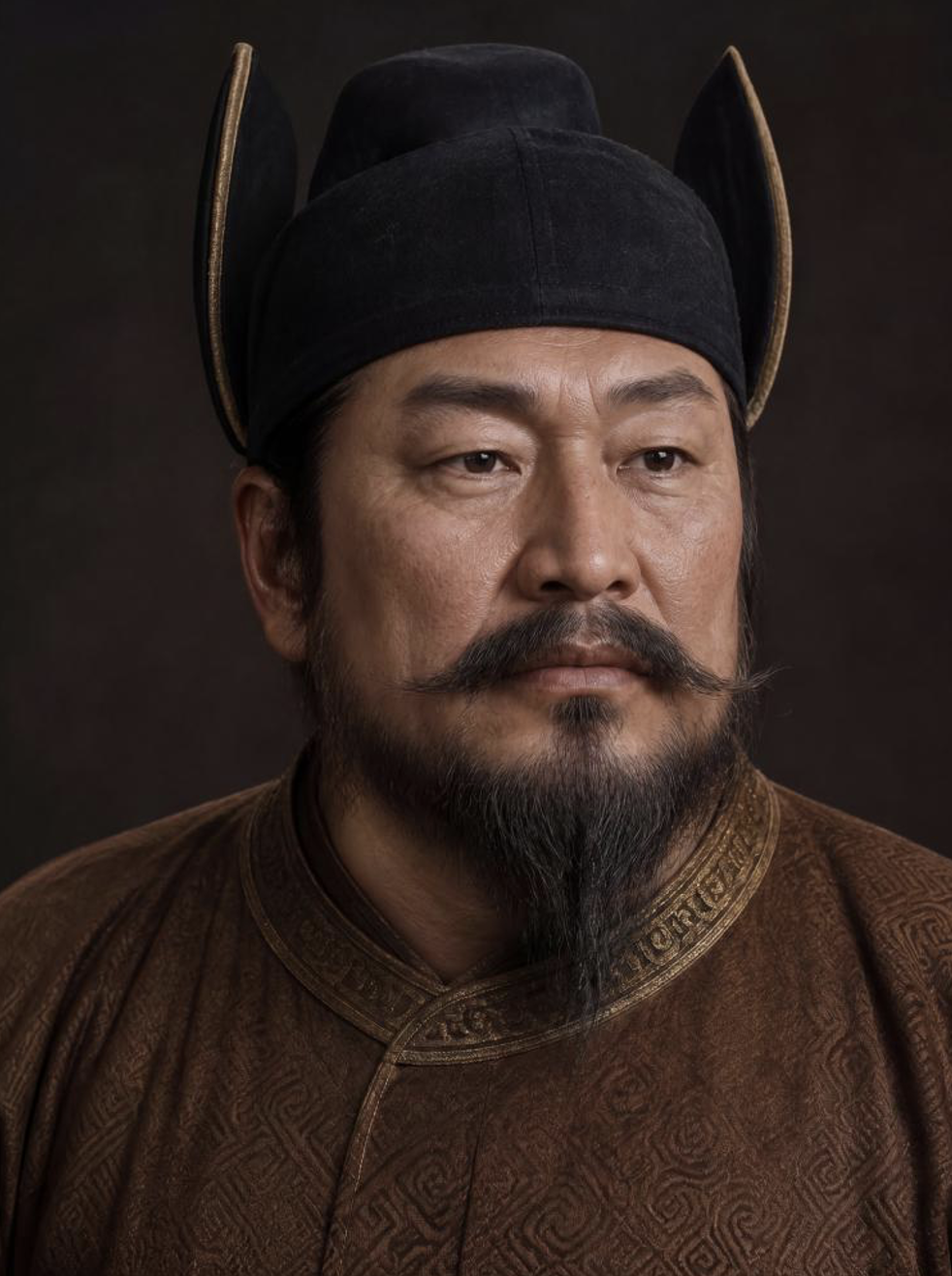
A team of technological archaeologists at Fudan University has released a facial reconstruction of Li Keyong, the Hedong Military Governor of the late Tang Dynasty (618-907). This facial reconstruction is based on ancient genome research that has revealed that Li Keyong, a hero of his time and leader of the “Turkish” Shatuo tribe, had black or dark brown hair, relatively light skin, and a brave and dignified appearance.
The image shows the facial reconstruction created by the technological archaeology team at Fudan University based on Li Keyong’s skull and genetic data.
For many years, it was difficult to determine Li Keyong’s “true appearance.” This was because the tomb had been repeatedly looted, and three sets of remains were found inside the tomb chamber. Since 2023, researchers from Fudan University and the Dai County Museum in Shanxi Province have conducted ancient genome analysis on the three sets of human remains unearthed from Li Keyong’s tomb. As a result, one set of remains was found to be a male aged 40-50, and radiocarbon dating corresponds to the period between 680 and 877 AD, which roughly coincides with Li Keyong’s birth and death dates. The remaining two sets of remains (one of which is located in the tomb passage) are those of younger individuals aged 22-24 and 18-20, respectively, and their ages date back to the Song-Jin dynasty (10th-13th centuries), making it highly likely that they were “intruders” involved in the looting.
Li Keyong’s paternal genotype belongs to the R1a-Z93 sublineage, and this gene is one of the most commonly found paternal genetic markers among nomadic peoples of the Eurasian steppe. On the other hand, his maternal haplogroup is C4a1a+195, which is closely related to ancient northern nomadic peoples and the Han Chinese.