https://en.people.cn/n3/2026/0330/c90000-20441304.html
At an exhibition held during the ongoing 2026 Zhongguancun Forum (ZGC Forum) in Beijing, a range of brain-computer interface (BCI) products — from specialized chips to rehabilitation systems — drew large crowds.
A BCI creates a direct communication pathway between the brain and an external device. By recording and interpreting brain signals, BCI allows the brain to “talk” directly to machines, enabling patients to control assistive devices.
In recent years, medical institutions in Beijing, Tianjin, Guangzhou, Wuhan, Nanjing and other cities have set up BCI clinics or clinical research wards. A range of BCI products developed in China has been applied in areas such as disease diagnosis, motor rehabilitation and neuromodulation treatment for conditions like Parkinson’s disease and epilepsy. This month, China’s National Medical Products Administration approved the world’s first invasive BCI medical device for market. The equipment is intended for patients who suffer from quadriplegia caused by cervical spinal cord injuries and are unable to perform grasping movements with their fingers.
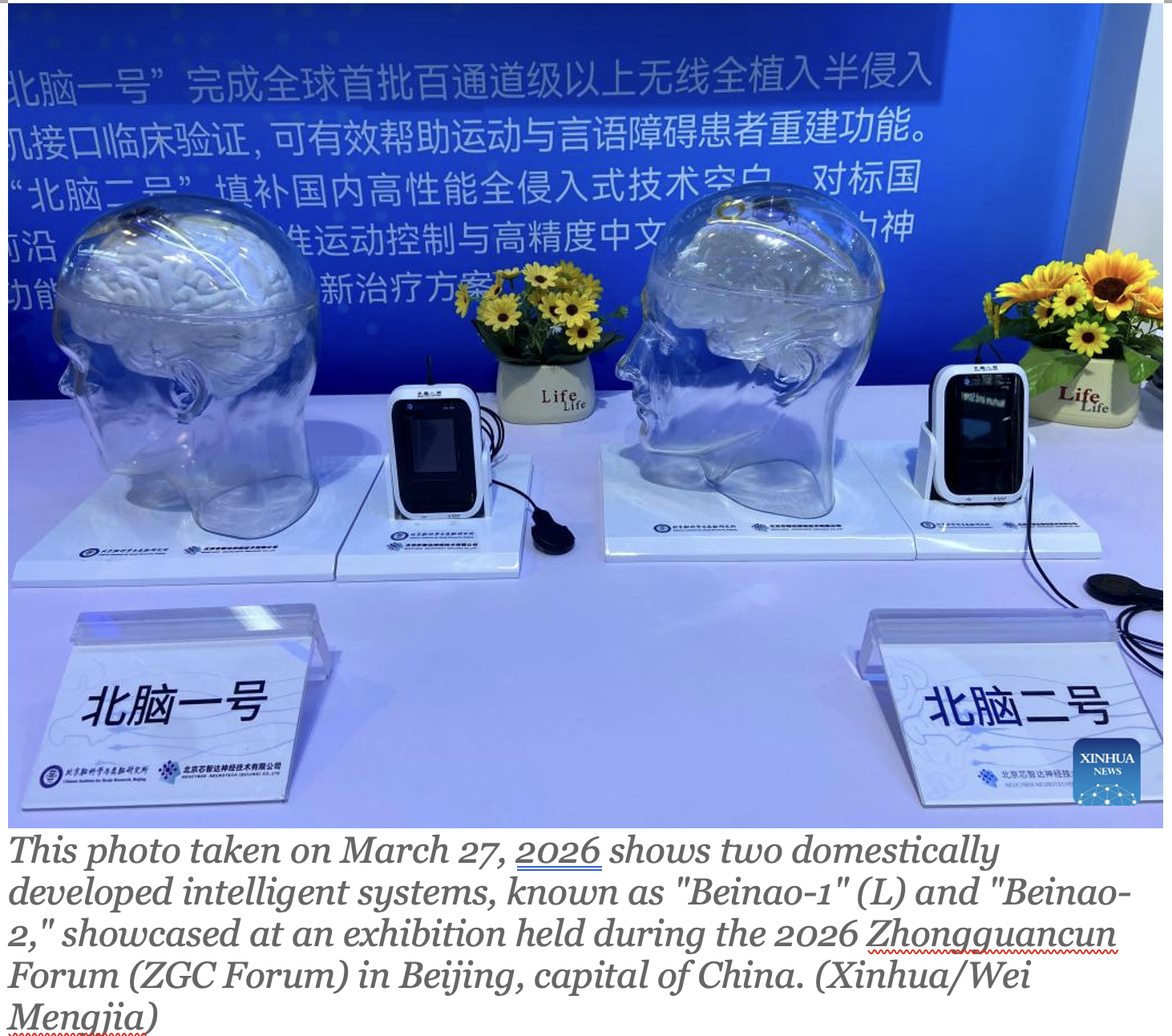
Among the exhibition products, two systems were “Beinao-1” and “Beinao-2” . “Beinao-1” is a semi-invasive BCI system which has been implanted in seven patients. All have recovered well and regained movement and speech functions. “Beinao-2” will enter clinical verification this year.