https://www.cas.cn/cm/202603/t20260331_5105477.shtml
Energy storage is the process of converting electrical energy into other forms for storage and releasing it back as electrical energy when needed. It’s like a giant “electricity bank,” allowing electricity to be flexibly allocated across time and space.
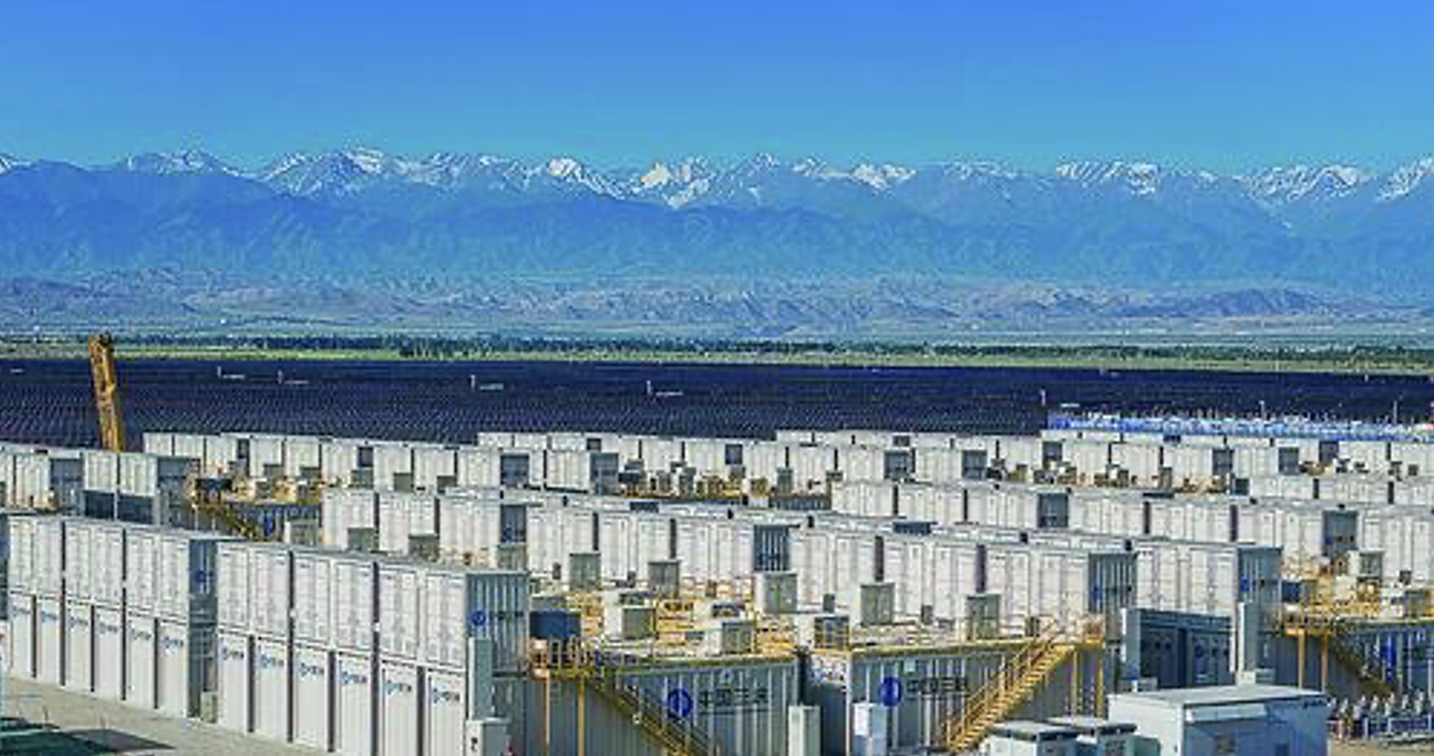
The world’s largest all-vanadium redox flow battery energy storage power station is presently located in the Gobi Desert of Jimsar County, Changji Prefecture, Xinjiang. It consists of hundreds of energy storage unit modules, with a storage time of up to 5 hours and a total capacity of 1 million kilowatt-hours, which has important pioneering demonstration significance for building a flexible and reliable new power system.
Powering this power station is the result of the long-term dedication of the energy storage technology research team at the CAS Dalian Institute of Chemical Physics. They have made breakthroughs in the core technology of vanadium redox flow batteries, significantly reducing battery costs, and are committed to enabling clean energy to “flow” to countless households in distant places, ensuring the steady and long-term development of China’s energy storage technology and leading the future.
From rooftop photovoltaic panels to wind turbines in distant mountains, renewable and clean power sources are continuously changing my country’s energy structure. However, wind power, photovoltaics, and other energy sources are characterized by volatility and intermittency, and their large-scale grid connection poses challenges to the stable operation of the power system. To truly achieve efficient utilization of clean energy, the support of safe, long-lasting, and large-scale energy storage technologies is essential.
An ideal large-scale energy storage system must simultaneously meet four conditions:
- high safety,
- long cycle life, and
- good life-cycle economics,
- while not causing significant environmental burden after decommissioning.
Based on these goals, among numerous technological approaches, the vanadium redox flow battery has come into the team’s view due to its inherent safety and recoverable capacity.
However, the reality is harsh: electrolyte costs remain high, core materials rely on imports, and the ion-conducting membrane, often referred to as the “soul” of the battery, has long been monopolized by foreign countries, resulting in exorbitant prices and becoming a key bottleneck restricting the cost reduction of vanadium redox flow batteries.
The article accounts in much detail the solutions to the above problems, which have finally led to the battery power station shown in the photo.
Photo: The world’s largest vanadium redox flow battery power station in Jimsar County, Xinjiang.