https://j.people.com.cn/n3/2026/0324/c95952-20439274.html
https://en.people.cn/n3/2026/0330/c90000-20441356.html
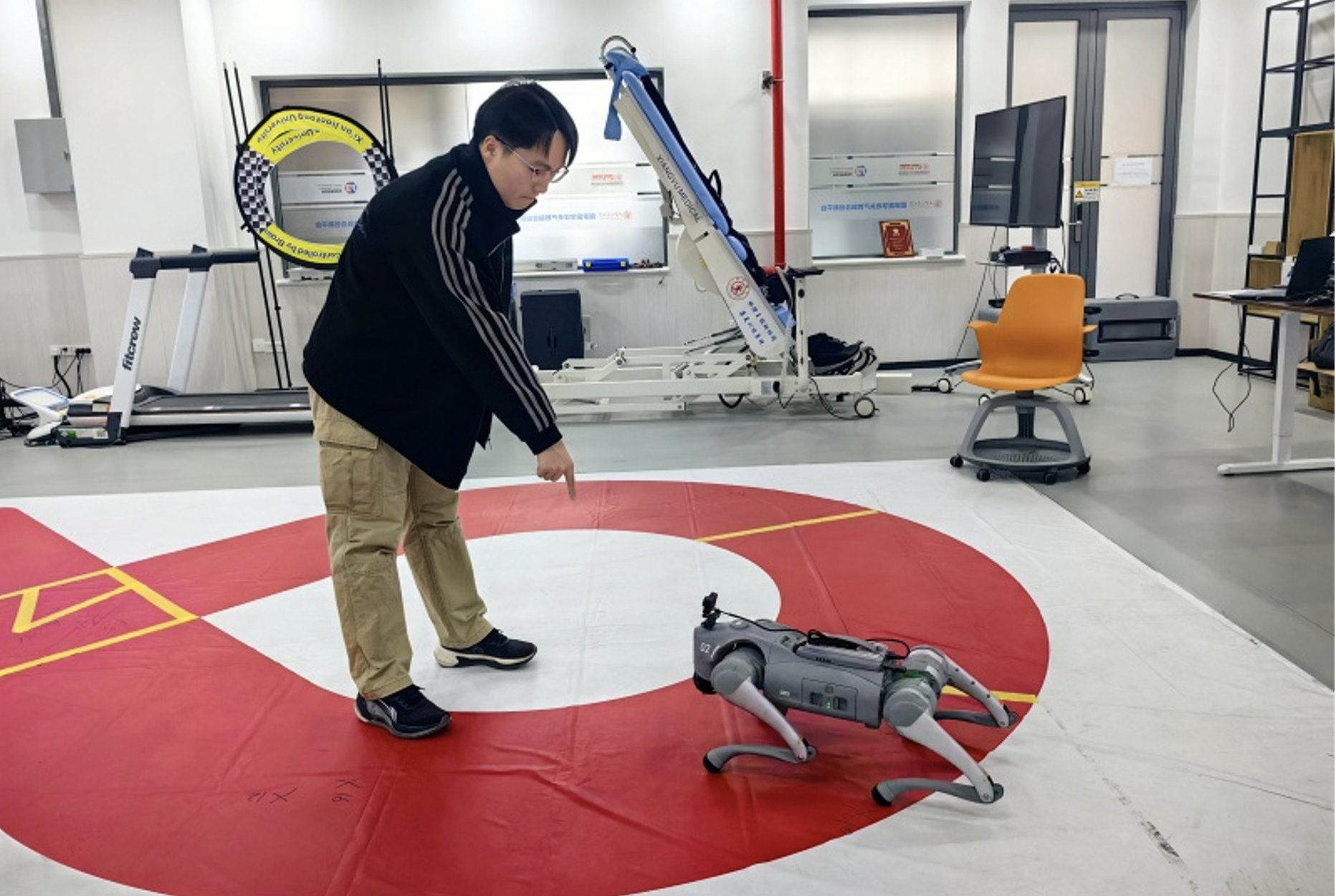
A team at Xi’an Jiaotong University has integrated brain control technology and autonomous navigation functions to command movements of a robotic dog. The non-invasive technology acquires signals and decodes information. Through hundreds of experiments, numerous programming and adjustments, and trial and error, a practical brain control process was perfected.
The system is described as a kind of “remote control in your mind.” When a user forms an intention, such as “move forward,” the brain generates corresponding EEG signals. The system collects and decodes those signals, identifies the intended command, translates it into a control instruction, and sends it to the robot dog, which then executes the movement. Currently, the system supports 11 basic mental commands, including forward, backward and turning, with the potential to expand further. Its recognition accuracy exceeds 95 percent, and the lag between thought and action is only about one second.
The robotic dog has the potential to become a powerful support tool for people with disabilities in the future. The BMI system organically combines the advantages of human decision-making with the perceptual capabilities of machines, enabling seamless communication between humans and machines. Furthermore, this technology is expected to have applications in a wide range of fields, including care for elderly people living alone in an aging society, medical assistance, rehabilitation training, and even automatic tracking systems.