https://en.people.cn/n3/2026/0319/c90000-20437797.html
https://www.cell.com/cell/abstract/S0092-8674(26)00230-8
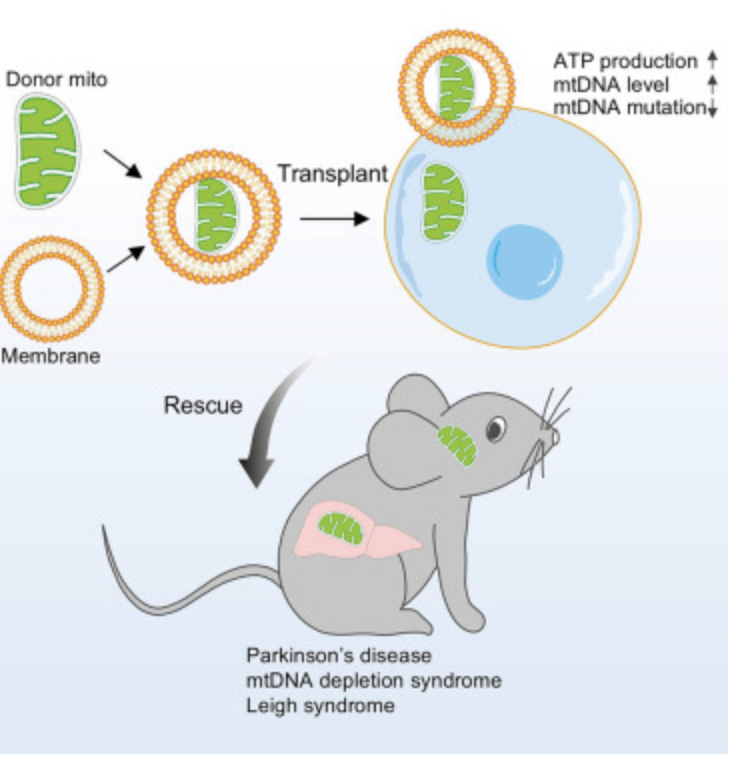
A research team from the CAS Guangzhou Institutes of Biomedicine and Health has developed a novel and efficient mitochondrial capsule transplantation technology. By “packaging” healthy mitochondria into vesicles, this technology achieved a safe and efficient “delivery” to mouse and monkey cells and tissues and significantly improved symptoms of diseases such as Parkinson’s disease, Leydig syndrome, and mitochondrial DNA deletion syndrome.
The research team used red blood cell membrane vesicles to create “capsule shells” to encapsulate healthy mitochondria, creating “mitochondrial capsules” with a diameter of about one-thousandth of a millimeter. They achieved the fusion of transplanted mitochondria with the cell’s own mitochondria and achieved long-term survival. Validation experiments showed that the delivery efficiency using “mitochondrial capsules” was extremely high, with approximately 80% of target cells successfully receiving the donor mitochondria. More importantly, these foreign mitochondria actively fused after entering the cell, and continuously performed their functions, compensating for cellular metabolic disorders and functional defects.
Addressing the issue of coexisting healthy and diseased mitochondria in cells of patients with various mitochondrial DNA mutations, experimental results showed that after successful transplantation of healthy mitochondria, the proportion of diseased mitochondria in the cells significantly decreased, the energy metabolism of dying cells rapidly recovered, and the genetic defects were perfectly compensated for.
The team constructed mouse models of several diseases, including Parkinson’s disease, Leydig syndrome, and mitochondrial DNA deletion syndrome. In a mouse model of Parkinson’s disease, delivery of mitochondrial capsules to the affected brain region effectively prevented the continued death of neurons, restored the normal function of mitochondria in the brain region, and significantly improved the motor function of the model mice, bringing them almost back to normal levels. In a mouse model of mitochondrial genetic diseases, mitochondrial capsule treatment significantly prolonged their lives and resolved the functional failure of multiple organs in the diseased mice.