https://english.news.cn/20260317/b03f83726e364660970072e9fe6c6bc0/c.html
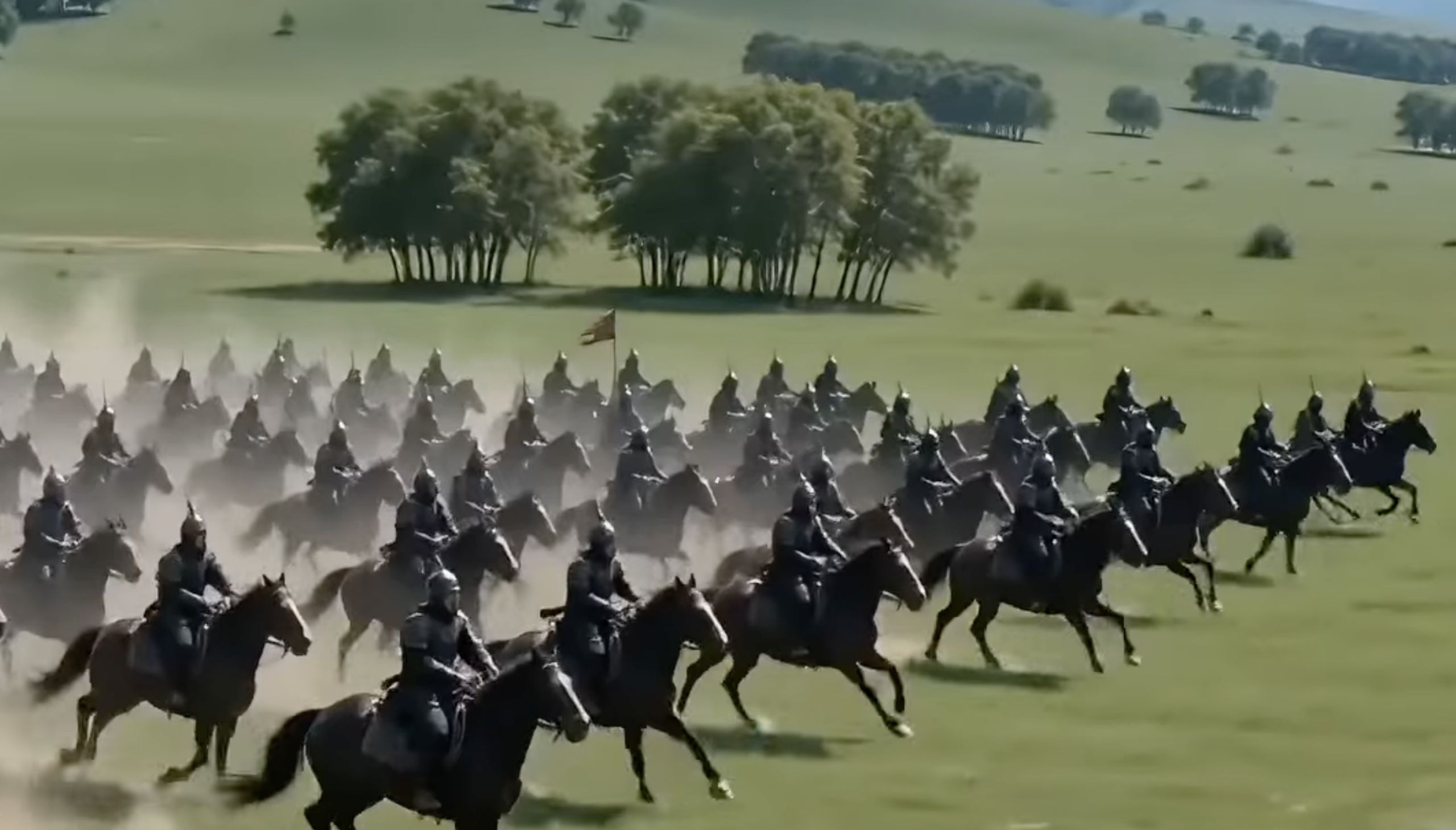
A current example is Yang Hanhan’s AI-generated short film about ancient Chinese general Huo Qubing, released by her team just a month ago, which has gone viral overseas.
In the film, not only do epic war scenes unfold one after another, but even details, such as the swirling dust of a desert charge, the tension of neighing warhorses, and the subtle furrow of the protagonist’s brow, are rendered with remarkable delicacy. These elements shatter the public stereotype of AI-produced content as crude and low-quality.
This project was completed by a team of just three people, with only 48 hours of work and about 3,000 yuan (about 435 U.S. dollars) in computing costs, according to Yang, a 35-year-old AIGC director from Wuhan, Hubei Province.
“Producing a four-minute film in 48 hours is becoming the industry standard,” Yang said, adding that as AI technology continues to evolve and advance, China’s film and television creation and cultural exports are being redefined.
The year 2025 is widely regarded by the industry as the “first year of the manju (comic-inspired short dramas) era” in China. A report shows that the total views of China’s manju market exceeded 70 billion last year. Among them, AI-generated manju, powered by AIGC technology, saw particularly rapid growth, with its market share surging from nearly zero at the beginning of the year to 11 percent by the end of the year.
At the end of January this year, Yang completed the script for the short film Huo Qubing. Yang explained that Huo was chosen as the protagonist because he went to the battlefield at 17 and achieved a decisive victory at 21. “The courageous spirit of this young hero, undaunted by hardship and forging ahead with determination, resonates universally and touches hearts everywhere.”
Yang’s team of three divided their duties clearly: one took on directing and writing, another handled AI generation and editing, and the third was in charge of music and sound effects. They focused their energy for four days, working a total of 48 hours, to complete the project.
“In the video production phase, we first generated about 1,700 AI images, selected 90 as storyboards to produce roughly 500 video clips, and then meticulously edited, scored, and refined the footage to bring our vision of the young hero to life,” Yang said. “In fact, we still have a technical road ahead before we can achieve our dream of creating a cinematic feature film with AI,” she said. “But the real value of AI is to free creators from tediously repetitive tasks, allowing them to dedicate more time to ideas and storytelling. After all, what truly determines the quality of a work is still the creator’s aesthetic, emotion and thought.”