https://j.people.com.cn/n3/2026/0309/c95952-20433793.html
On March 5, a closing ceremony for the China-Chile joint manned submersible survey voyage of the Atacama Trench was held aboard the Chinese scientific research vessel “Tuan-1,” currently docked in Valparaiso, Chile. The survey completed explorations of biodiversity, chemosynthetic ecosystems, and plate subduction mechanisms in the Atacama Trench.
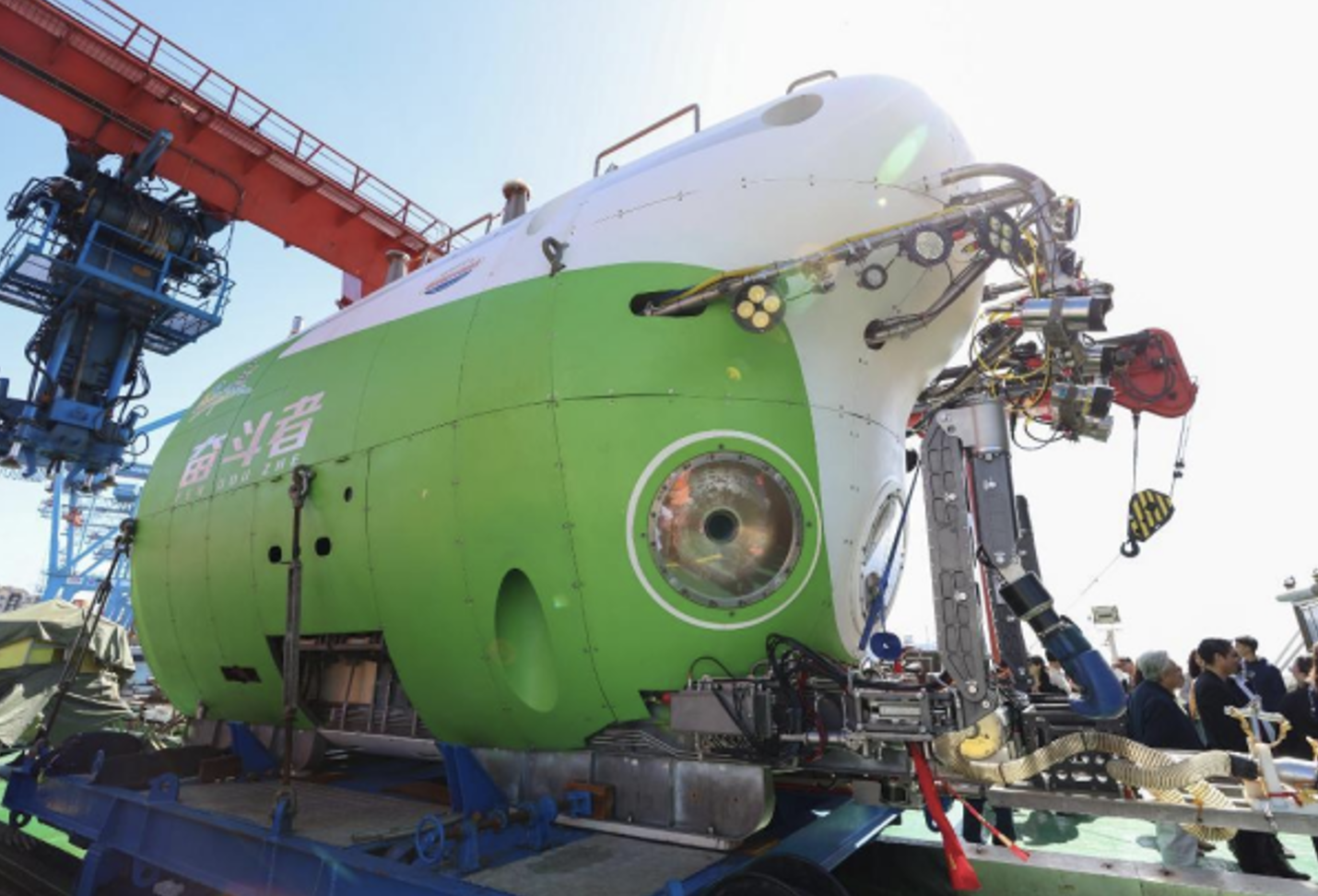
The survey was jointly organized by the CAS Institute of Deep Sea Science and Engineering and the University of Concepción in Chile, and was conducted over more than 40 days. During the mission, the manned submersible “Fentouzhe,” aboard “Exploration No. 1,” conducted a total of 36 dives and collected over 3,500 biological specimens. This laid the foundation for multifaceted, interdisciplinary research in the field of deep-sea exploration.
According to Du Mengran, the chief scientist from China, one of the achievements of the survey is the observation of the deepest cold seep ecosystem in the Southern Hemisphere. This provides new evidence supporting the hypothesis of a ‘global chemosynthetic life corridor’ proposed by Chinese scientists. Furthermore, the discovery of at least three different species of deep-sea snailfish within the same trench highlights the biodiversity of fish in this region.
A cold seep ecosystem refers to a unique ecosystem that develops in the dark ocean floor world, using chemical substances seeping from the seabed as an energy source for chemosynthesis. The “global chemosynthetic life corridor” posits that such systems are widely developed at the bottom of ocean trenches worldwide.
The survey also discovered rupture structures of seafloor faults related to past megathrust earthquakes in Chile. This provides valuable in-situ observational data for understanding how seismic activity shapes deep-sea topography and affects the habitats of marine life.