RamEx removes spectral noise in Raman-based microbial cell sorting

http://english.cas.cn/newsroom/research-news/202602/t20260224_1151116.shtml

https://link.springer.com/article/10.1186/s40168-026-02339-3

Scientists from the CAS Qingdao Institute of Bioenergy and Bioprocess Technology have developed a novel computational tool, RamEx, designed to resolve the computational bottleneck in high-throughput microbial Ramanomics.

RamEx streamlines the full Ramanomic analysis pipeline, from data preprocessing and automated quality control to advanced data mining. An Iterative Convolutional Outlier Detection (ICOD) algorithm tackles spectral noise in an unsupervised manner to dynamically identify and eliminate spectral artifacts, ensuring high-quality input for downstream analysis.

The platform’s performance was validated using diverse datasets, including pathogenic bacteria, probiotics, and yeast fermentation systems. Notably, RamEx successfully captured phenotypic heterogeneity in genetically identical yeast cells by detecting subtle metabolic fluctuations and tracking the dynamic accumulation of intracellular macromolecules, including lipids, proteins, and nucleic acids.

more insights

https://j.people.com.cn/n3/2026/0818/c95952-20489791.html

https://www.recordchina.co.jp/b990111-s50-c20-d0189.html

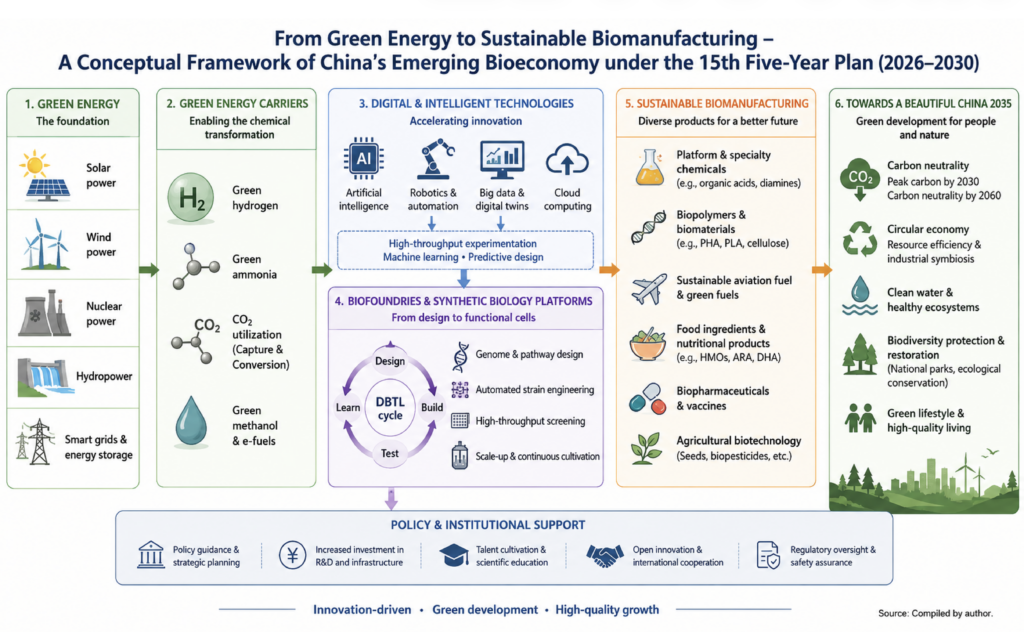
On August 17, 2026, at  Shanghai’s Yangshan Port 8,000 tons of green methanol were used to refuel a cargo ship owned by the French shipping giant CMA CGM.

Green methanol is a key alternative fuel for reducing carbon emissions in sectors such as shipping and the chemical industry. According to Zhu Zhaokai, President of Shanghai Electric Group, this large-scale green methanol refueling operation demonstrates that China has established a complete industrial chain—spanning from large-scale production and onshore/maritime storage and transport to port-side refueling and shipboard utilization and will help drive the global shipping industry toward zero emissions.

The green methanol fuel supplied in this operation was primarily produced at Shanghai Electric’s “Integrated Demonstration Project for Wind Power and Biomass-Combined Green Methanol” in Taonan City, Jilin Province. The production process makes use of various resources, fully utilizing biomass materials—such as corn stalks from Taonan City—and green hydrogen generated from wind power.

http://english.cas.cn/newsroom/research-news/202607/t20260729_1179357.shtml

http://10.1016/j.biortech.2026.135397

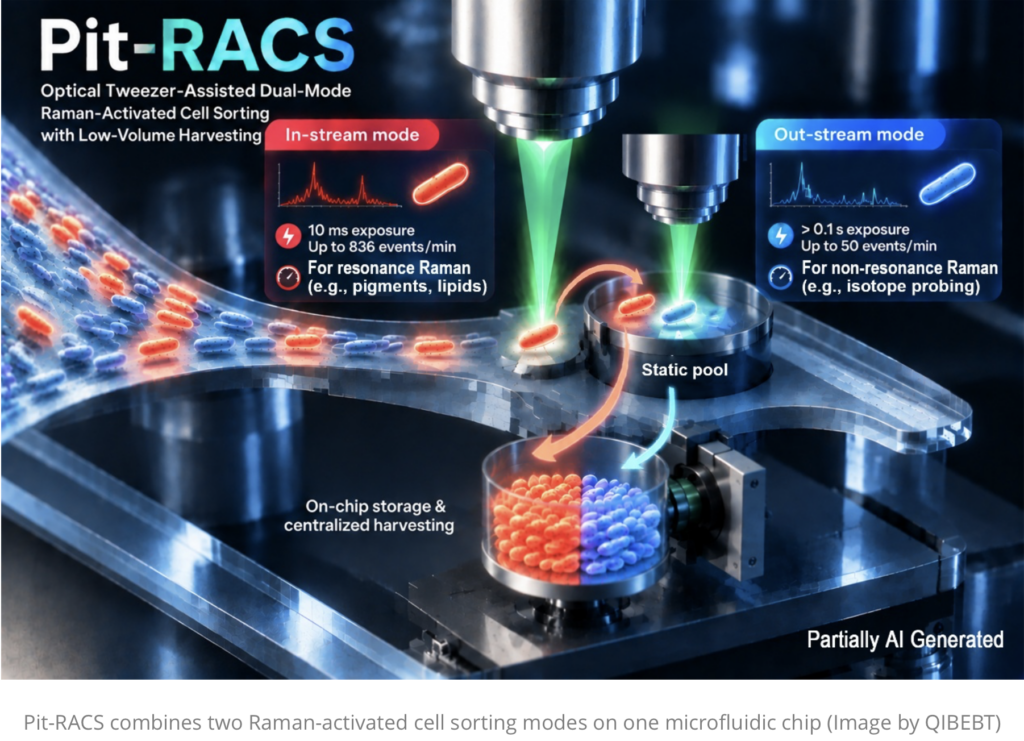
Scientists from CAS QIBEBT have developed a Raman-activated cell sorting strategy for the high-throughput discovery of ethanol-tolerant microorganisms based on their metabolic activity rather than growth.

Conventional microbial screening generally follows an “isolate first, test later” workflow, in which cells are cultivated under selective pressure, isolated, and evaluated. This approach is slow, labor-intensive and biased toward fast-growing or abundant microbes. This is important in solid-state baijiu fermentation, where rising ethanol concentrations stress microbial communities, while valuable but low-abundance active microbes are easily overlooked.

Therefore, the researchers shifted the criterion from whether a cell could grow under ethanol stress to whether it maintained active metabolism. They combined heavy-water (D2O) labeling with single-cell Raman spectroscopy and a high-throughput Raman-activated flow cytometer known as FlowRACS. Metabolically active cells incorporate deuterium from D2O into newly synthesized biomolecules, producing a characteristic carbon-deuterium (C-D) Raman signal. Based on this signal, the researchers derived a carbon-to-deuterium ratio (CDR) and a Raman tolerance index (RTI) to quantify the in-situ ethanol tolerance of individual cells.

The platform functionally sorted 2,400 cells per hour with an accuracy of 91.3%. One sorting round followed by culture from pit mud pretreated with 8% ethanol yielded six pure strains, all with an RTI above 50%, as opposed to only two among nine isolates from conventional agarose-plate screening. Overall, this strategy increased strain-mining efficiency 4.5-fold and phenotypic validation 7-fold, reducing the time required for key steps from days to hours.

Genomic and transcriptomic analyses revealed distinct tolerance mechanisms. Lactiplantibacillus plantarum (RTI = 85.1%) enhanced lactate dehydrogenase expression by 3.4-fold while maintaining high alcohol dehydrogenase activity, indicating adaptive redox balancing. Staphylococcus epidermidis (RTI = 62.2%) activated lipid synthesis and glycerol metabolism genes, indicating cell envelope remodeling. Both strains were rare in the original microbial community, demonstrating that function-based sorting recovers key microbes that are missed by abundance- or growth-based approaches.

The study could also be extended to acid, salt, and solvent tolerance, which would aid in building robust industrial chassis strain libraries. This work represents the latest progress of the iMAPS Consortium (in-situ Metabolic Atlas Projects @ Single-cell; www.iMAPS.info).

https://j.people.com.cn/n3/2026/0717/c95952-20478766.html

https://pubs.acs.org/jacsat/article/148/28/29854/5203821/Selective-Gold-Recovery-via-Thermally-Generated?searchresult=1

A new technology recovers gold from waste liquid using naturally occurring micro-droplets at the oil-water interface, simply by moderately heating the oil-water system—without the addition of any reducing agents, adsorbents, or catalysts.

The technology was developed by a team from the China University of Petroleum in Qingdao, in collaboration with researchers from Stanford University.

Drawing on their previous research into geological fluids—where they discovered that large numbers of chemically active micro-droplets are generated at oil-water interfaces under high-temperature conditions—the team formulated a bold hypothesis: “Could we selectively extract gold from complex waste liquids simply by utilizing the chemical properties of these micro-droplets?”

To test this, the team constructed a heat-driven oil-water interfacial reaction system. Moderate heating causes the continuous formation of micro-droplets (5–50 micrometers in diameter) at the oil-water interface. These droplets function like micro-reactors with high redox activity, continuously generating active species such as highly active electrons, hydrogen radicals, and hydroxyl radicals. This process enables the reduction of gold ions in the solution to elemental gold without the need for external reducing agents, catalysts, or adsorbents; furthermore, the coalescence and growth of these micro-droplets allow for the formation of millimeter-sized gold particles.

The study also elucidated the chemical mechanism by which the interfacial micro-droplets selectively recover gold. Experiments demonstrated gold recovery rates of 98.5% from complex aqua regia waste liquid and 97.0% from electronic waste leachate. The recovery time was further reduced through heating and cooling cycles, and a recovery efficiency of over 90% was maintained even when the oil phase was reused. In a scale-up experiment, 500 milliliters of gold-containing leachate were processed to yield 0.5657 grams of solid product. The gold achieved a purity of 99.4%, demonstrating high potential for application as an environmentally friendly technology for recovering precious metals from complex acidic wastewater.

Back to …

This website stores cookies on your computer. These cookies are used to provide a more personalized experience and to track your whereabouts around our website in compliance with the European General Data Protection Regulation. If you decide to to opt-out of any future tracking, a cookie will be setup in your browser to remember this choice for one year. Accept or Deny