https://www.cas.cn/cm/202602/t20260212_5101729.shtml
https://english.cas.cn/newsroom/cas_media/202511/t20251106_1096131.shtml
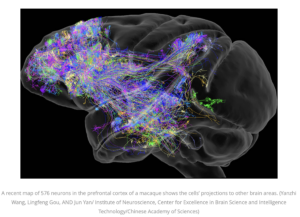
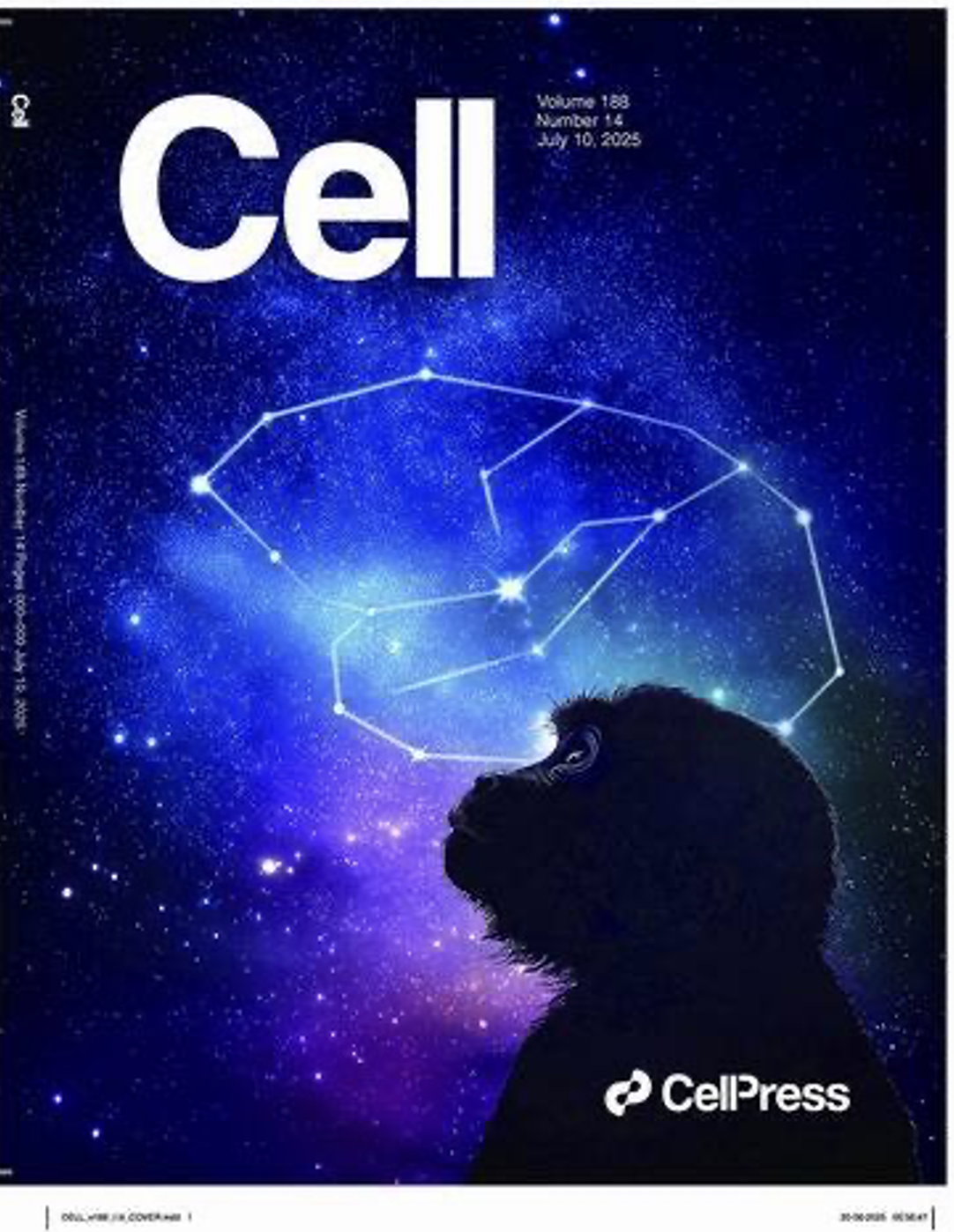
On July 10, 2025, “Cell” published breakthrough findings on macaque single-cell brain mapping, providing in-depth analysis of the diversity of brain cell types, connectivity patterns, developmental evolutionary patterns, and molecular mechanisms of brain diseases. The research findings were based on work from over 300 researchers in more than 30 research institutions in China and abroad, and also one of the most important achievements of the China Brain Project during the 14th Five-Year Plan period.
The Brain Map Project is dedicated to creating high-precision “brain maps”, by accurately locating nerve cells and analyzing neural network connectivity patterns, as a vital support for understanding brain function mechanisms, conquering brain diseases, and developing brain-like intelligence. China possesses technological advantages in brain mapping. The Chinese Academy of Sciences collaborates in this field with nearly 20 universities and research institutions across the country. In 2020, Mu-ming Poo and Academician Luo Qingming of the Chinese Academy of Sciences spearheaded the establishment of the China Working Group for Brain Mapping Research. It acts as a bridge, integrating resources such as technology, platforms, personnel, and data, bringing together domestic scientists engaged in brain science into a “research network,” and initially formed a closed loop of “technology development – data collection – analysis and application.”
Under this framework, participating teams leverage their respective strengths, each “taking on” a sub-problem under the large-scale brain mapping scientific plan to conduct research. Thus, in the early stages of the mouse connectomics research, scientists from multiple research institutions, including the Center for Excellence in Brain Science and Intelligence Technology (CEIT) and the Suzhou Institute of Brain Space Information at Huazhong University of Science and Technology, collaborated extensively. They divided the work among themselves, leveraging their respective strengths and platforms, focusing on different aspects of the research, such as sample preparation, imaging, data analysis, and database construction.
CEIT played a crucial role in advancing the large-scale brain mapping scientific project. At the outset, it assembled a dedicated team for the “14th Five-Year Plan” of whole-brain mesoscopic connectomics mapping, with Sun Yangang serving as chief scientist. The team encompassed 17 research groups and two major platforms: the whole-brain mesoscopic connectomics platform and the Brain Science Data and Computing Center. Liu Zhen, a researcher at CEIST, created the cloned monkeys “Zhong Zhong” and “Hua Hua”, pioneered a new front in primate brain science cell-specific targeted research toolsets in 2020. Gou Lingfeng at CEIST developed a system, capable of supporting fully automated AI reconstruction and collaborative proofreading by multiple participants.
Brain intelligence originates from the diversity of nerve cells and the complexity of neural connections; exploring its essence is a strategic high ground in brain science research. Creating a high-resolution map of the brain is extremely difficult. The human brain contains 86 billion neurons, each with approximately 10,000 synaptic connections, totaling trillions of connections. At the same time, neurons playing different roles are highly compressed into an extremely small space, surrounded by various signal interferences, making even locating a single neuron a challenging task. This also means that the previous approach of individual research groups focusing on specific “points” is unsuitable for brain mapping research.
In September 2025, the “International Primate Mesoscopic Brain Mapping Consortium* was established, with over 100 scientists from 25 countries participating. It released an “International Primate Mesoscopic Brain Mapping Consortium White Paper” and will build a global, open, and collaborative research network over the next 10 years, dedicated to tackling the challenge of mapping the entire human brain’s mesoscopic neural connectivity.