https://www.cas.cn/cm/202601/t20260128_5098788.shtml

In 2025, a quadriplegic patient (left) controls his wheelchair with his thoughts through a BCI system. (Photo provided by the Center for Excellence in Brain Science and Intelligence Technology, Chinese Academy of Sciences)
According to Hu Sheng, deputy director of the Active Device Testing Institute of the Shanghai Medical Device Testing Institute, the functionally of invasive BCIs currently under development in the industry primarily focus on replacing motor and language abilities, fine neural modulation, and sensory reconstruction such as vision.
in December 2025, a BCI team announced significant results at the 2025 Brain-Computer Interface Conference in Shanghai, demonstrating the success of a multi-center registration clinical trial for a semi-invasive BCI. The trial lasted 78 days, with 32 patients with cervical spinal cord injuries undergoing BCI implantation surgery at over ten hospitals. The subjects were able to control a pneumatic glove with their thoughts, performing fine motor skills such as grasping.
Also in December 2025, the CAS Center for Excellence in Brain Science and Intelligence Technology, in collaboration with Huashan Hospital affiliated with Fudan University and other institutions, announced new progress in clinical trials of brain-computer interfaces: a patient with quadriplegia due to cervical spinal cord injury could control an electric wheelchair to stroll around the neighborhood and command a robotic dog to fetch takeout simply by “thought.”
As one of the six future industries anchored in the “15th Five-Year Plan” recommendations, BCI technology aims to achieve collaborative interaction between biological and machine intelligence by establishing an information channel between the brain and machines.
Invasive brain-computer interface (BCI) systems are classified as Class III medical devices, and their registration requires clinical trials to gather sufficient scientific evidence to prove their safety and effectiveness. In order to promote the development of mature products capable of large-scale application, two cornerstones must be upheld:
- Safety: minimizing the trauma and long-term effects of implantation surgery on the brain. It is hoped to further lower the surgical threshold. If implanting a brain-computer interface (BCI) can be as easy as getting an earring in the future, it will be more readily accepted by the public,.
- Effectiveness: achieving high-throughput data acquisition, wireless transmission, and decoding with the highest possible precision. This implies significantly increasing the number of acquisition channels and the computing power of the decoding algorithm; second, achieving wireless transmission with low power consumption and controlling system temperature rise to prevent the brain from “overheating”; and third, improving software decoding efficiency.
While invasive brain-computer interfaces (BCIs) remain a high-barrier medical technology, primarily serving patients with serious illnesses such as paralysis, the industry holds far greater expectations for their future, such as becoming a new economic growth engine and even empowering the general public. Basic research findings such as “brain mapping” can improve the application effects of BCIs, including but not limited to more precise selection of brain information collection locations.
Regarding large-scale development, seven departments, including the Ministry of Industry and Information Technology, the National Development and Reform Commission, and the Ministry of Education, jointly issued the “Implementation Opinions on Promoting the Innovative Development of the Brain-Computer Interface Industry” in July 2025, proposing to accelerate the cultivation of a new future industry track. Interviews revealed that Shanghai and other regions are building future industry clusters for BCIs, integrating technical teams, proof-of-concept centers, and clinical applications to accelerate the transformation of BCI technology.
“In the future, the BCI field will need rich software and application scenarios. Just as the widespread adoption of smartphones is inseparable from applications, BCIs also need to develop ‘killer applications,'” said Zhao Zhengtuo. “When we can achieve a huge leap in cognitive ability with minimal invasiveness, the era of BCIs benefiting the masses will truly arrive.”
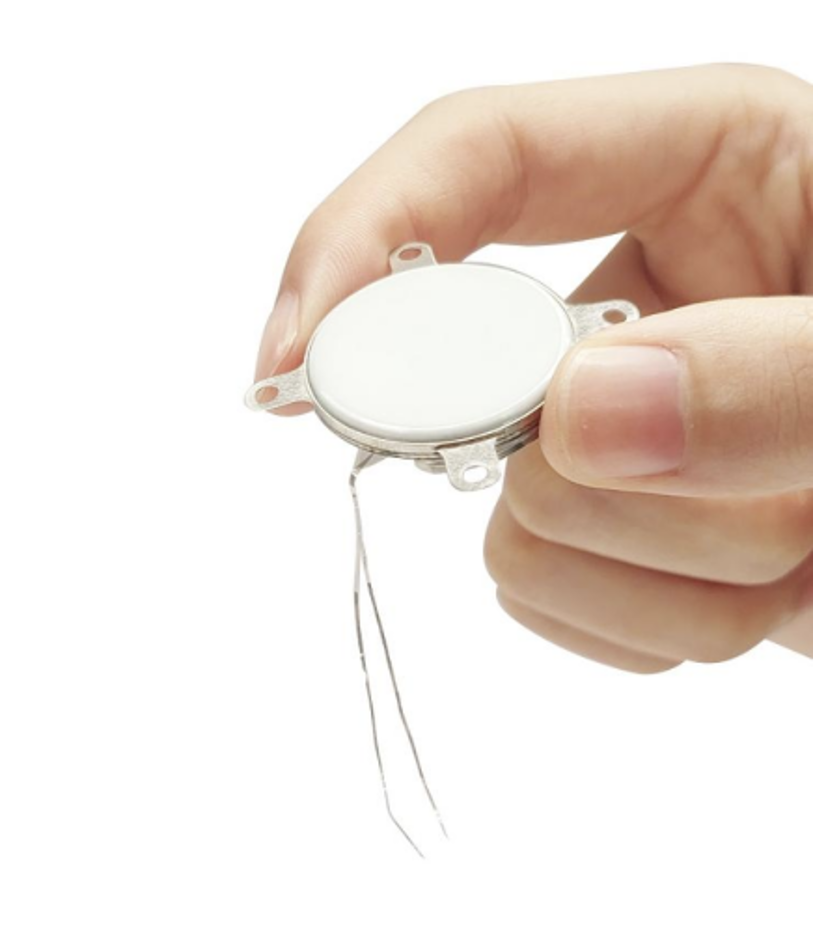
The photo shows an invasive BCI implant developed by the CAS Center for Excellence in Brain Science and Intelligence Technology (photographed on March 22, 2025). Xinhua News Agency (Photo by Chen Yaoxu)