https://www.cas.cn/cm/202601/t20260119_5096521.shtml
https://technews.tw/2025/01/23/china-fusion-tokamak-east-plasma-loop-artificial-sun/
According to the 2026 Nuclear Fusion Energy Science and Industry Conference, controlled nuclear fusion is at a critical stage of transitioning from the laboratory to engineering and commercialization. It is expected that we will see the “first light lit by nuclear fusion” around 2030.
According to the conference, the core of fusion commercialization lies in finding a technological path that is both feasible and economical,” several experts reached this consensus at the conference. Currently, China’s fusion field has formed a unique pattern of national team leadership, private enterprise support, and diversified collaboration. Advanced tokamak devices, represented by the EAST (Experimental Advanced Superconducting Tokamak) at the CAS Hefei Institutes of Physical Science, and the China National Nuclear Corporation’s (CNNC) China Circulator-3 in Chengdu, constitute the core in cutting-edge scientific exploration.
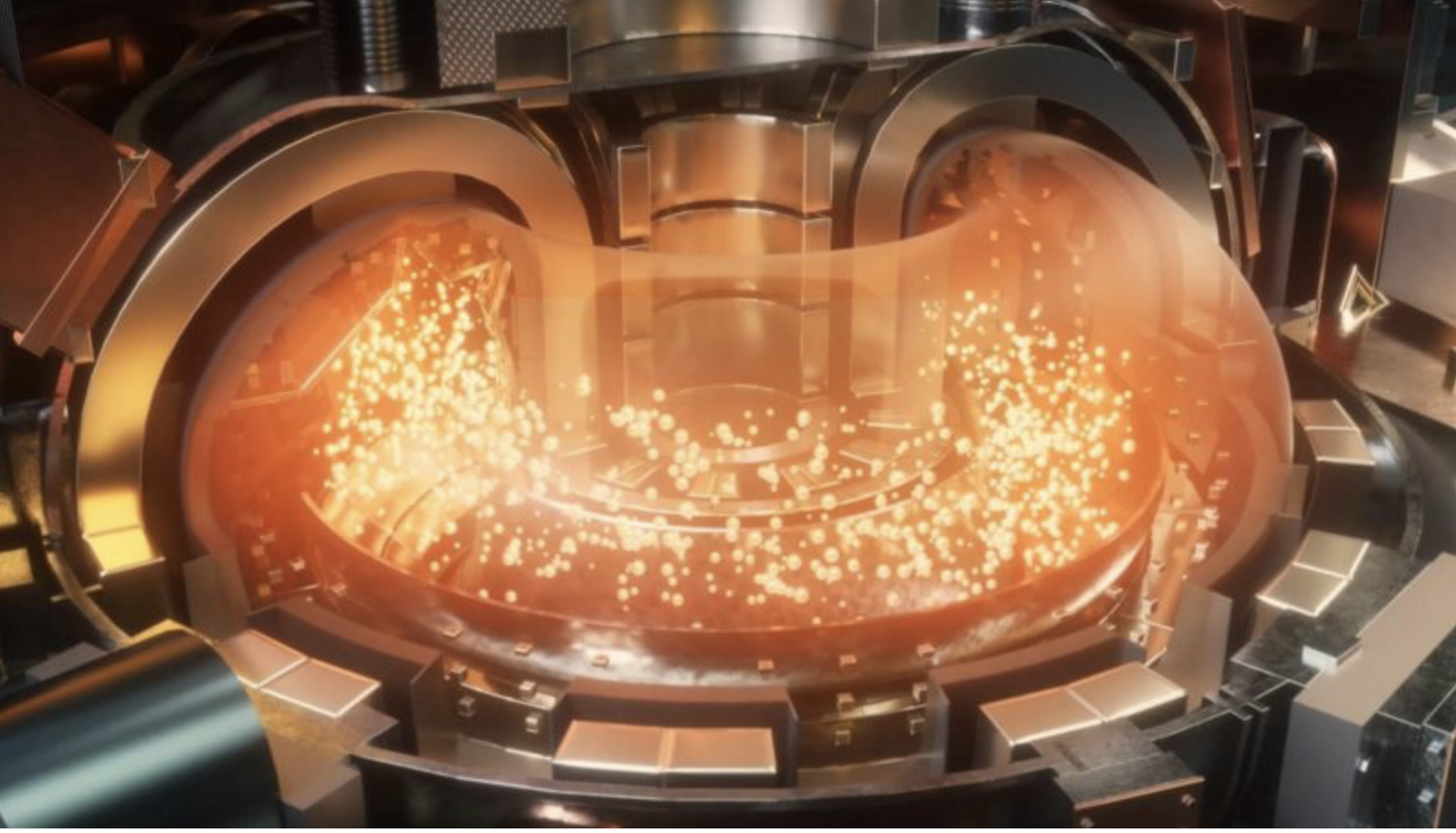
Currently under construction, the Comprehensive Research Facility for Key Systems of Fusion Reactors, a national major scientific and technological infrastructure, is dedicated to the research and verification of key fusion technologies. The Hefei Compact Fusion Experimental Facility (BEST), as an engineering verification platform for the next-generation “artificial sun,” strives to achieve power generation demonstration by 2030.
Meanwhile, private enterprises are becoming a vital force. Thus, Xinghuan Energy is dedicated to challenging fusion engineering verification with spherical tokamak and “multi-stroke” innovative solutions; Xingneng Xuanguang targets the power supply needs of specific scenarios such as AI data centers; Xin’ao Group is committed to promoting safer and cleaner fusion fuel research. Huali Energy undertakes the production of related components such as the BEST vacuum chamber; Western Superconducting Technologies provides 69% of the related low-temperature superconducting wires for the ITER project; Xuguang Electronics’ electron tubes can achieve a maximum output power of 1 megawatt. Lanzhou Petrochemical is tackling challenges in ultra-low temperature compact heat exchange technology, and China First Heavy Industries (CFI) has successfully overcome difficulties in ultra-high temperature radiation materials. Through the joint construction of laboratories, all parties are effectively breaking through technical bottlenecks in the supply chain.
National and local governments are working together to cultivate the future fusion industry, with Shanghai, Chengdu, Hefei, and other places accelerating the formation of agglomeration effects based on the industrial ecosystem. Industry organizations are promoting the coordinated development of the industrial chain by strengthening standard alignment and resource sharing.
Talent cultivation paths in the fusion industry are becoming more diversified. At the conference, the Fusion Science and Engineering College of Hefei University of Technology was unveiled. Universities such as Lanzhou University have also established related colleges to cultivate interdisciplinary professionals. Companies such as Hefei Intelligent Forging & Stamping, Guoguang Electric, and Shanghai Superconducting Technologies have strengthened their talent development and practical capabilities through major projects. The Xiyuan Fusion Innovation Fund, jointly established by the Institute of Plasma Physics, CAS Hefei Institutes of Physical Science, and Fusion New Energy (Anhui) Co., Ltd., provides a platform for young researchers to tackle core technologies.
At the opening ceremony of the conference, the Fusion Financial Institutions Alliance was established, and the Future Fusion Energy Venture Capital Fund, spearheaded by Hefei Industrial Investment Group, was launched, guiding financial services to precisely meet industry needs.
According to Song Yuntao, Vice President of the CAS Hefei Institutes of Physical Science and Director of the Institute of Plasma Physics, fusion energy started from basic research in the laboratory and is gradually moving towards large-scale applications in the future. This is not only a cutting-edge exploration of the “ultimate energy,” but also a vivid practice of driving manufacturing upgrades and cultivating new productive forces through technological innovation.