https://en.people.cn/n3/2025/1204/c90000-20398471.html
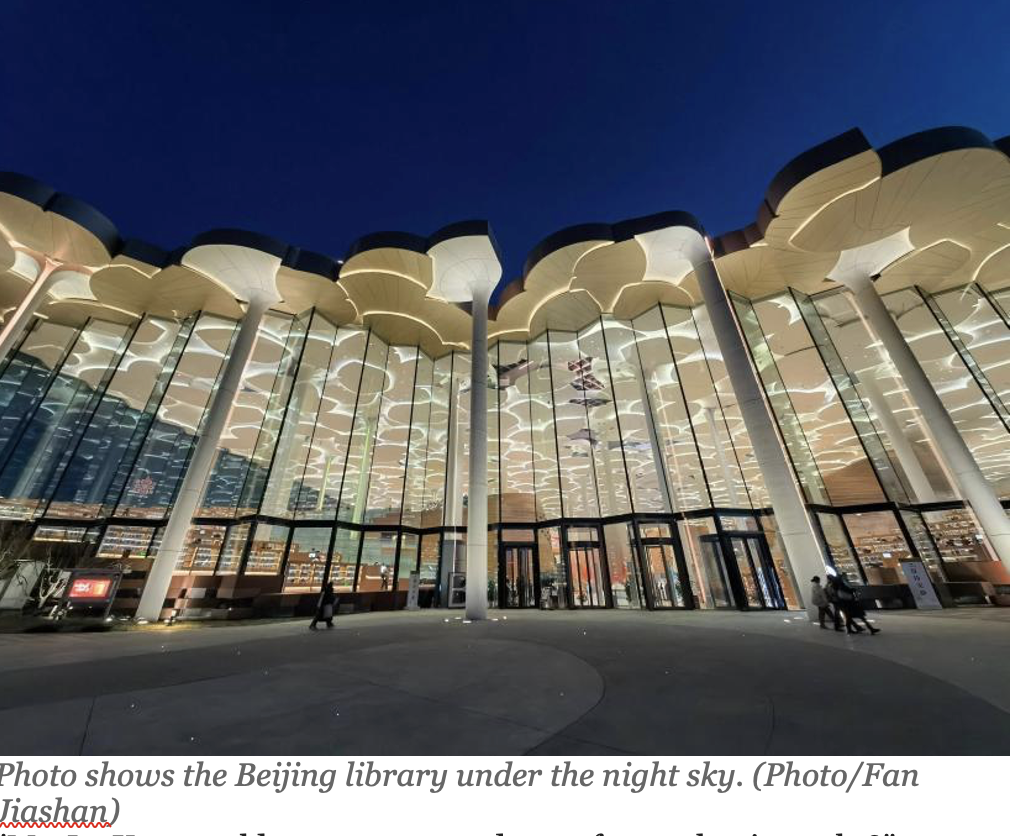
As one of three institutions under the Capital Library of China, the Beijing Library has introduced an AI-powered digital human modeled after renowned Chinese writer Lu Xun. Historically, Lu Xun played a role in establishing the predecessor of the Capital Library of China. Today, his digital incarnation symbolizes the library’s digital transformation.
The digital Lu Xun uses AI technologies to provide guided tours, recommend books, and introduce local cuisine and cultural sites.
In addition to the digital Lu Xun, there are two other digital characters, “Tutu” and “2122,” each with distinct personalities: one childlike and the other futuristic. These avatars, driven by large language models, engage visitors in conversations about literature and everyday life. Since the library opened at the end of 2023, these AI characters have participated in more than 1.7 million voice interactions.
Entering the library feels akin to stepping into a digital universe. Visitors can scan a QR code to verify their identity, customize their attire, and quickly generate digital avatars within the Metaverse. These avatars can navigate virtual spaces such as the Children’s Library, Ancient Books Collection, Art Literature Library, and Intangible Cultural Heritage Library, exploring venue information and upcoming events. Readers can also interact with one another via their digital avatars, sharing reading lists, exchanging book reviews, and bridging online and offline reading experiences.
Looking ahead, the library plans to introduce additional immersive features, including personalized virtual study rooms. The team is also developing an online version of the metaverse library, enabling remote access to its digital environment and vast knowledge collections.