https://www.cas.cn/syky/202511/t20251104_5087368.shtml
https://doi.org/10.1016/j.eng.2025.10.021
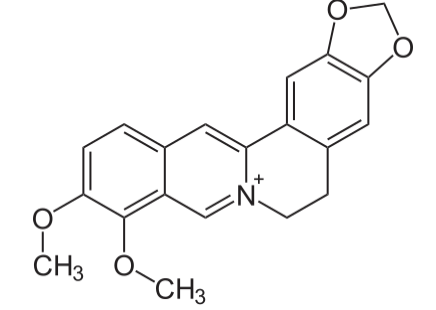
A research team at the CAS Center for Excellence in Molecular Plant Sciences has reconstructed the entire biosynthetic pathway of berberine using the plant chassis of *Nicotiana benthamiana*, achieving the de novo synthesis of this complex natural product.
Berberine is a pharmacologically active benzylisoquinoline alkaloid with applications in anti-inflammatory, antibacterial, metabolic disease treatment, and neuroprotective applications.
The research team utilized the unique spatial compartmentalization and metabolic homeostasis characteristics of plants and established a fine-tuning system of transcription factors mediated by a weak promoter. This strategy regulated the metabolic flux in tobacco, balancing it with host homeostasis and improving the necrosis phenotype induced by traditional strong promoters. The team found that reducing CjWRKY1 expression from high to moderate levels eliminated cytotoxicity and increased berberine yield by 222%. Comparative transcriptome analysis showed that transcription factors can induce the expression of endogenous homologous enzymes, thereby complementing heterologous pathway function. A highly active mutant was obtained through enzyme engineering; after synergistic regulation, berberine yield increased to 13.91 μg·g⁻¹, reaching 15.03 μg·g⁻¹ dry weight after heat treatment.